Blog

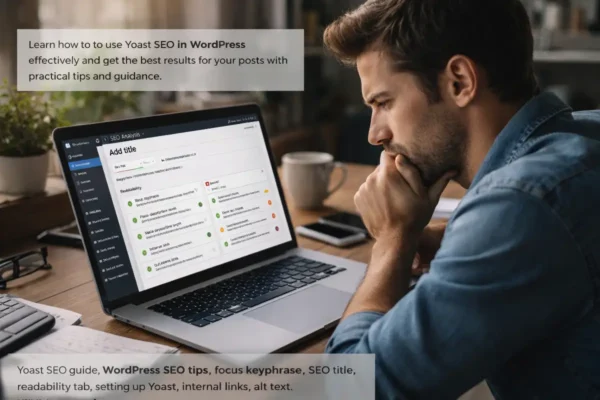
How to Use Yoast SEO Properly on a WordPress Post
A practical Yoast SEO guide for WordPress users who want clearer posts, stronger search signals and better Google results.

TL;DR:
- Regular website updates enhance credibility, search rankings, and visitor engagement.
- Neglecting maintenance increases security risks, reduces performance, and harms SEO.
- Continuous small improvements foster trust, visibility, and better conversion for small businesses.
Your website is never truly finished. Many Canberra small business owners invest in a new site, feel relieved when it goes live, and then quietly move on. Weeks become months, and the site sits unchanged while your business evolves around it. The problem is that a static website sends a quiet but clear signal to potential clients: nobody is home. Regular updates are not optional maintenance. They are a core business habit that protects your credibility, strengthens your search rankings, and turns casual visitors into real enquiries.
| Point | Details |
|---|---|
| Websites need ongoing care | Consistent updates keep your business visible, credible, and competitive online. |
| Neglect brings real risks | Ignoring updates leads to security exposures and damaged first impressions. |
| Performance and SEO improve | Fresh content and design changes help you rank higher and attract more clients. |
| Better user experience converts | Regular improvements make it easier for visitors to become customers. |
Think of your website the way you think about your physical premises. If your shopfront had peeling paint, outdated signage, and a phone number that no longer worked, you would fix it quickly. Your website deserves the same attention. Visitors form an impression within seconds, and an outdated site creates doubt before you have had a chance to speak with anyone.
Websites that remain static are quickly seen as outdated by potential clients, affecting credibility. For a Canberra service business, a consultant, or a trades operator, that first impression often determines whether someone picks up the phone or clicks away to a competitor.
Regular updates keep your site aligned with where your business actually is. New services, changed pricing, updated team members, and current testimonials all signal that you are active and trustworthy. Fresh content also supports your marketing campaigns by giving you something relevant to share and link to.
Here is what routine website maintenance typically covers:
Good website design and branding reinforces your business identity at every touchpoint. When your site reflects your current offer clearly, it builds confidence in potential clients before they have even spoken to you.
“A website is a living part of your business. When it stops moving, it starts working against you.”
Understanding website support statistics makes it clear how many small business sites are quietly failing due to neglect. Treating your site as a digital asset that requires ongoing care is the mindset shift that separates growing businesses from stagnant ones.
Outdated websites are significantly more prone to breaches and performance issues. For a small business, a security incident is not just an IT problem. It can mean lost client data, reputational damage, and in some cases, legal exposure under Australian privacy obligations.
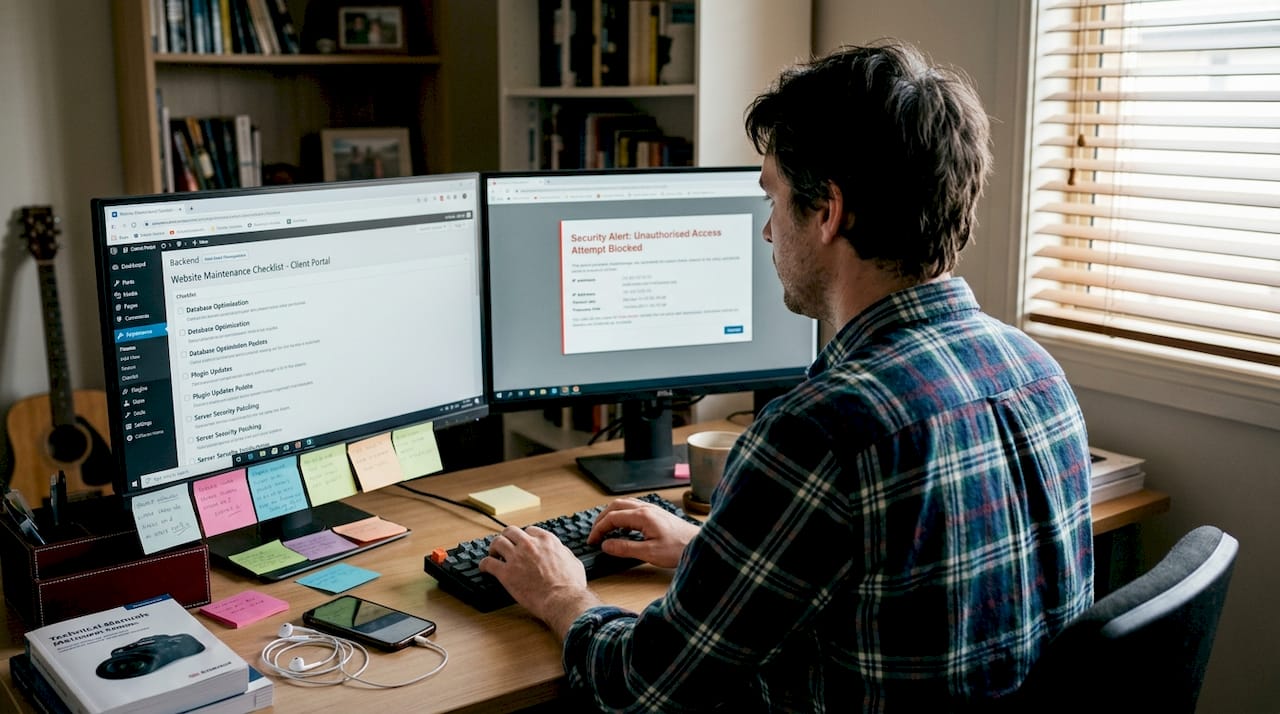
WordPress powers a large share of small business websites, and its plugins and themes require regular updates to patch known vulnerabilities. Skipping those updates is like leaving a door unlocked and hoping nobody tries it. The risks compound quietly over time.
Performance is equally important. Slow-loading pages frustrate visitors and increase the rate at which people leave without taking action. Search engines also factor page speed into rankings, so a sluggish site hurts you twice.
Here is a practical comparison of what routine updates cost versus emergency fixes:
| Scenario | Typical time required | Approximate cost |
|---|---|---|
| Routine monthly maintenance | 1 to 2 hours | Low, predictable |
| Recovering from a security breach | 10 to 40+ hours | High, unpredictable |
| Fixing a broken plugin after neglect | 2 to 6 hours | Moderate |
| Restoring a hacked site from backup | Days | Very high |
The pattern is consistent. Small, steady habits create a strong defence. Emergency fixes are expensive, stressful, and avoidable. Taking website security steps before a problem occurs is always the smarter path.
The managed updates benefits for small businesses are well documented. Handing off routine maintenance to a trusted provider means fewer surprises and more time focused on running your business.
Pro Tip: Schedule your website updates during your quietest trading periods, such as early mornings or weekends, to minimise any brief disruptions to your site while changes are applied.
The regular maintenance benefits principle applies well beyond websites. Consistent, low-effort upkeep always outperforms costly emergency interventions.
Google gives preference to regularly updated sites, lifting their rankings above static competitors. This is not a minor advantage. For a Canberra business competing for local search traffic, appearing on the first page of results can be the difference between steady enquiries and silence.
Search engines interpret regular updates as a signal that your site is active, relevant, and worth showing to users. A site that has not changed in eighteen months looks abandoned from a search engine’s perspective, regardless of how good the original content was.
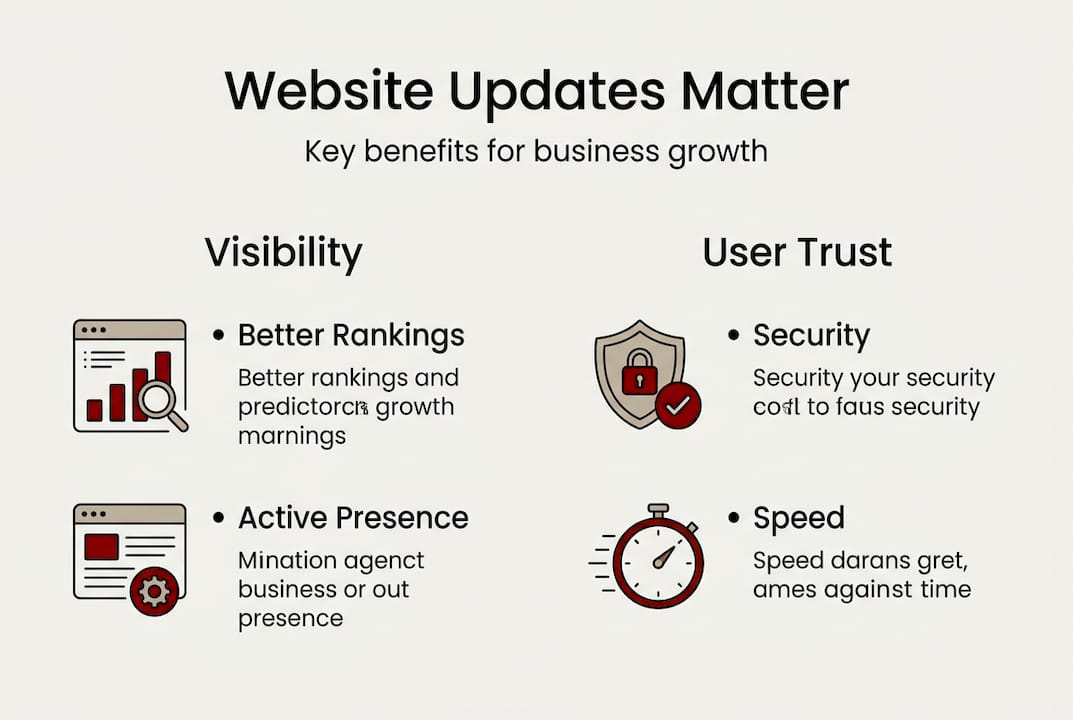
Here is how update frequency affects key SEO outcomes:
| Update frequency | Search engine signals | Likely ranking impact |
|---|---|---|
| Weekly content additions | Strong activity signals | Positive, sustained growth |
| Monthly reviews and refreshes | Moderate activity signals | Steady maintenance of position |
| Quarterly updates only | Weak signals | Gradual decline over time |
| Rarely or never updated | Inactive signals | Significant ranking loss |
To make the most of each update session, follow these steps:
SEO is an ongoing process, not a one-time task. Website design for more traffic works best when it is paired with a consistent habit of keeping content current and relevant. Businesses that treat SEO as a living practice build compounding visibility over time.
Continually improving your site design and content increases client engagement and conversion rates. A visitor who lands on a clear, current, and easy-to-navigate page is far more likely to take action than one who encounters confusion or outdated information.
User experience improves with each thoughtful update. Mobile compatibility, for example, is not a one-time fix. As devices and browsers evolve, your site needs to keep pace. A page that worked well on mobile two years ago may now display awkwardly, causing visitors to leave before reading your offer.
Consider a practical example. A Canberra allied health provider updated their services page to clearly list each offering with a short description and a direct booking link. Within a few weeks, form enquiries increased noticeably. The content had not changed dramatically. What changed was the clarity and ease of the path from interest to action.
Regular updates that improve user experience typically include:
Pro Tip: Ask your most recent clients what confused or slowed them down on your website. Their honest feedback will tell you more than any analytics report.
Investing in modern design for business growth is not about chasing trends. It is about removing friction so that the right clients can find you, trust you, and contact you without hesitation.
We see it regularly. A business invests in a well-built website, celebrates the launch, and then treats it as a finished project. Six months later, the site still shows last year’s team photo, a service that was discontinued, and a testimonial from a client who has since moved on.
The uncomfortable truth is that inactivity has a cost. It is just a quiet one. You do not get an invoice for the enquiries that never came because your site looked stale. You do not see the clients who checked your site and chose someone else. The damage is invisible until it is significant.
Consistent small improvements always outperform big infrequent overhauls. A site that receives steady attention builds trust with both visitors and search engines over time. It also builds confidence internally. When your team knows the website is current and working properly, they refer people to it without hesitation.
Treating your website as a living asset rather than a static brochure is the shift that changes outcomes. Investing in website support is not an overhead. It is a commercial decision that protects and grows what you have already built.
If your website has been sitting unchanged for months, now is a good time to pause and take stock. Small, consistent updates protect your investment, strengthen your search visibility, and keep your site converting visitors into leads.

At Asporea Digital, we work with Canberra small businesses to keep their WordPress website support running smoothly through managed care plans, security monitoring, and practical content updates. Whether you need a full site review or ongoing monthly support, we can help. Explore our customisation for Canberra WordPress sites or visit Asporea Digital to find out how we can keep your website working as hard as you do.
Aim to update your website at least monthly. Routine updates every few weeks maintain credibility, security, and keep your content aligned with your current business offer.
Neglected sites face increased risks from cyber attacks and performance issues, along with declining search rankings and weaker first impressions for new clients.
Yes. The Google algorithm favours sites that add new content and make regular improvements, which signals relevance and activity for Canberra-based searches.
Key landing pages drive both traffic and leads, so focus on your home, services, blog, and contact pages as these most influence customer perception and SEO.

A practical Yoast SEO guide for WordPress users who want clearer posts, stronger search signals and better Google results.
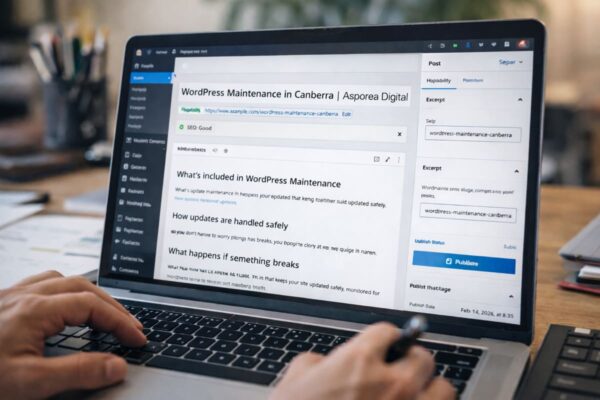
A plain English guide to the WordPress fields that shape what Google shows: permalinks, titles, slugs, headings and excerpts, plus how redirects keep old links
Your website might look fine, but its technology could be holding it back. Learn why keeping WordPress, PHP and plugins current keeps your business faster,