Blog

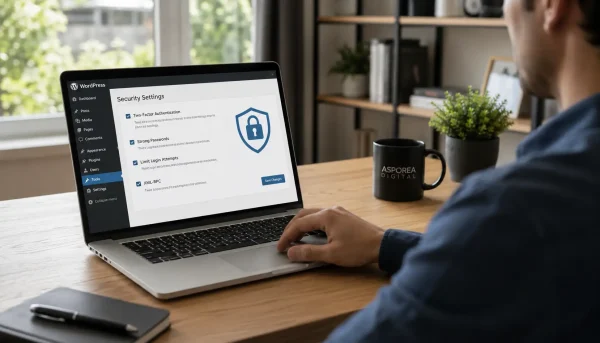
WordPress Security Basics Every Small Business Website Should Get Right
Practical WordPress security basics for Australian small businesses, covering logins, updates, backups, plugins, hosting and monitoring.

There comes a point where manual booking starts costing more than people realise.
Not just in money, although that matters too. Amongst the interruptions, the admin load, and the stop-start rhythm of the day. In reception staff trying to answer the phone while someone is standing at the desk, an email has just come in, and a practitioner wants to know whether the next appointment has confirmed.
That is usually the point where online booking starts making real sense.
For the right business, it is not about replacing people. It is about reducing unnecessary friction around the work they are already doing. It is about helping clients book more easily, giving reception staff more breathing room, and making the front office feel less like a constant traffic controller for avoidable tasks.
Most business owners do not resist online booking because they think the old way is brilliant.
They hesitate because it feels like another system to pay for, another process to learn, and another layer to fit into a front office that is already busy enough. If the team is coping, even imperfectly, it can feel easier to keep pushing on than to stop and rethink how bookings are handled.
That is understandable.
But the real comparison is not between a free option and a paid one. The real comparison is between paying for a booking system and continuing to pay, quietly, for inefficiency. If reception is constantly interrupted, if bookings are coming in from too many directions, if staff are spending too much time answering basic availability questions, or if no-shows are leaving holes in the day, there is already a cost sitting in the business. It is just not always labelled clearly.
A good booking system does not turn a business into a robot. It simply takes the repetitive parts of booking out of the hands of staff where it makes sense to do so.
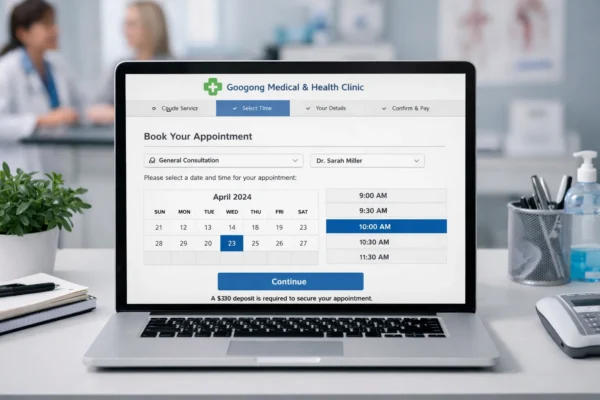
Instead of every appointment starting with a manual enquiry by phone, email, message or at reception, people can see available times and book straight away.
That shift matters more than it sounds.
It means fewer interruptions during the day. Fewer back-and-forth exchanges about basic availability. Fewer missed opportunities because someone meant to call back later and never did. It also means clients can act while they are ready, including outside business hours, rather than waiting until someone is free to respond.
The front office still matters. Walk-ins may still matter. Phone calls may still matter. But the pressure on those channels starts to reduce because not everything needs to begin there.
The savings are rarely dramatic in a single moment. They show up in all the little places where the day gets easier.
Reception has fewer calls to field about simple booking questions. Staff spend less time going back and forth to confirm appointments. The calendar becomes more reliable because more people are booking directly into available times rather than relying on someone to interpret and relay the request. Deposits or upfront payments can also be taken before the appointment, which creates a stronger commitment and helps reduce no-shows before they become a problem.
That does not just improve cashflow. It improves certainty.
A booking in the calendar with a payment attached to it feels very different from a verbal “I’ll come in Thursday” floating around in the hope that everyone remembers.
This is where online booking tends to make the biggest difference.
Surgeries, vets, health clinics, hairdressers, massage therapists, chiropractors, physios, beauty clinics and other appointment-led businesses usually feel the value quickly because they deal with the same booking friction every day. The more often appointments are arranged manually, confirmed manually, changed manually, or chased manually, the more obvious the gain becomes once that load starts moving into the website.
In a clinic setting, it can be even more useful because the booking process is rarely as simple as “pick a time and turn up”.
Different practitioners may have different calendars. Different services may need different time slots.
Appointments often come with different requirements depending on the service. Some need intake information before the client arrives, others may require a deposit, and some need buffer time between bookings. In certain cases, repeat appointments make sense, while others need tighter control over how and when they can be booked.
A good booking system can reflect that structure properly instead of forcing reception to hold it all together by hand.
Bookly comes up often because it is a familiar WordPress option and it suits a lot of appointment-based businesses well.
It can sit neatly inside a WordPress website, which means the booking journey feels connected to the brand rather than bolted on from somewhere else. Clients can choose services, see available times, book with the right practitioner, and in many cases pay or leave a deposit before they arrive. That keeps the experience cleaner for the client and more manageable for the business.
That said, Bookly is not the only option.
Some businesses are better suited to other systems depending on how they work. Amelia is often a strong fit for service-based businesses that want a polished WordPress booking experience. WooCommerce Bookings can make sense if the site is already built around WooCommerce. Some businesses may prefer a standalone booking platform if they want a different style of scheduling workflow.
The right answer depends less on brand loyalty and more on how the business actually operates day to day.
In a clinic, the front desk is ot just booking appointments. It is greeting clients, managing arrivals, handling practitioner questions, responding to changes, dealing with delays, and trying to keep the day moving. When bookings are still arriving through too many manual channels, that pressure becomes constant.
This is where online booking really earns its place.
It creates better alignment between the website and the front office. The information clients see online is the information the reception team is working from. The available times are clearer. The service options are clearer. The appointment lengths are clearer. The process becomes more consistent, which means fewer surprises and less time spent cleaning up booking confusion later.
That kind of alignment reduces stress in a way that is hard to appreciate until it is working properly.
This is usually the real question behind the whole conversation.
Is it worth paying for? Quite often, yes.
Because the spend is not just buying a tool. It’s delivering smoother operations, buying back reception time, removing interruptions. This means fewer loose ends, confirmed appointments and an easy way for clients to book time with you. People like being able to make decisions quickly. If they are ready to book, a clear online path often helps them commit before hesitation gets in the way.
That is where the value starts to stack up.
Once the basic booking flow is in place, there is usually more the website can do.
Businesses often need different booking rules depending on the service and the way they operate. One appointment type may require a deposit, while another may need full payment upfront. Different practitioners may need different availability rules, and some services may need screening questions before a booking can be confirmed. Others may benefit from repeat appointments, package bookings, memberships, or stronger integration between the website and the wider client journey.
This is where online booking starts to move beyond convenience and into business design.
It can help improve show-up rates, smooth out cashflow, reduce receptionist overload, and support a more predictable day. But those benefits usually come from getting the setup right, not just from switching on a plugin and hoping for the best.
This is the part that is often overlooked.
A booking tool on its own is not the whole solution. It needs to be set up properly, matched to the way the business works, and maintained so it stays useful rather than becoming another source of confusion.
If the website says one thing and the front office handles bookings another way, people notice. If the service list is unclear, if appointment lengths are wrong, or if the confirmation flow does not reflect how the business actually works, the tool can create more friction instead of less.
The value is not just in having booking on the website. The value is in having a system that matches the business properly, supports the receptionist instead of fighting with them, and keeps the website and front office working in step.
The real win is not simply that people can book online.
It is that the business starts to feel less interrupted by the process of getting booked. The front desk becomes calmer. Staff spend less time fielding simple enquiries. More appointments are confirmed before the client arrives. More payments or deposits are handled earlier. The website becomes part of the business operation rather than just a digital brochure sitting off to the side.
That is when online booking stops looking like an extra expense and starts looking like common sense.
Thinking about online booking but not sure where to start? We can help you work out what makes sense for your clinic, salon or appointment-based business.

Practical WordPress security basics for Australian small businesses, covering logins, updates, backups, plugins, hosting and monitoring.
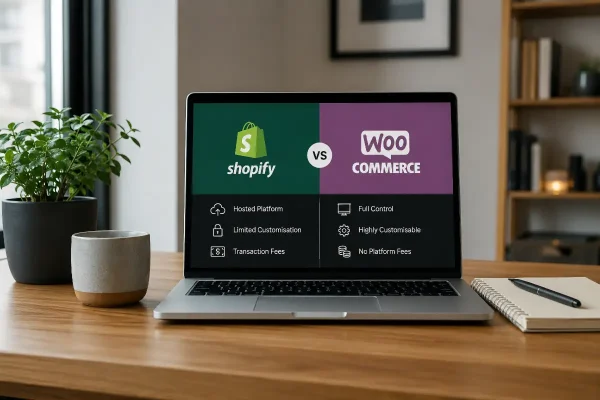
Compare Shopify and WooCommerce to see where WordPress gives your store more control, flexibility and room to grow.
A simple fix today prevents the slow creep of website issues tomorrow. Stay steady, secure and in control.