
Education and Planning

Where Your Customers Are in January (How You Find Them)
Help January customers choose with confidence by aligning your products with what they want at the start of a new year.

Many Canberra small business owners believe professional websites cost tens of thousands and take months to build. In reality, website packages bundle design, hosting, and features for $2,000 to $12,000 and launch in weeks. These fixed-price solutions include e-commerce and booking capabilities that help local businesses compete online without budget surprises. This guide explains how website packages work, their benefits and limits, and how to choose the right solution for your Canberra business.
| Point | Details |
|---|---|
| Bundled web solution | Packages combine design hosting CMS SEO and features at a fixed price. |
| Fast launch timelines | Canberra packages typically launch in two to four weeks, far quicker than custom builds. |
| Fixed price protection | The fixed price model protects your budget and reduces scope creep. |
| SMB suitability limits | Templates cover about eighty per cent of SMB needs but have limits for complex customised requirements. |
| Ecommerce and bookings | Packages include ecommerce and booking features to help local businesses compete online. |
Website packages bundle everything a Canberra small business needs to establish an online presence. Packages typically include 5-10 pages, mobile-responsive design, CMS, basic SEO, SSL and often e-commerce or booking functionality. This bundled approach eliminates the confusion of piecing together separate services and vendors.
Canberra SMBs can expect to invest between $2,000 and $12,000 depending on package complexity and features. Entry-level packages cover essential business information and contact forms, while mid-tier options add WooCommerce stores or booking systems. Premium packages include advanced integrations, membership areas, and custom workflows. The fixed-price model protects you from unexpected costs that plague custom projects.
The mechanics involve using pre-built WordPress templates and plugins for 60-80% cost reduction, launching in 2-4 weeks. Developers customise proven templates with your branding, content, and required features rather than coding from scratch. This template-based approach doesn’t mean cookie-cutter results. Professional developers adapt templates to match your brand identity and business goals.
Typical package features include:
The development workflow follows a structured timeline:
Pro Tip: Request a staging environment where you can review and test your website before it goes live. This preview period lets you request changes without affecting your public site.
Most affordable website service packages include ongoing hosting and basic support for the first year. You’ll receive a fully functional website with training on how to update content, add products, or manage bookings. This turnkey approach means you can focus on running your business rather than learning web development.
Website packages deliver significant advantages for Canberra small businesses operating with limited budgets and tight timelines. Templates cost 60-80% less than custom builds and cover 80% of SMB requirements. This cost efficiency comes from reusing proven design patterns and pre-built functionality rather than reinventing solutions for common business needs.
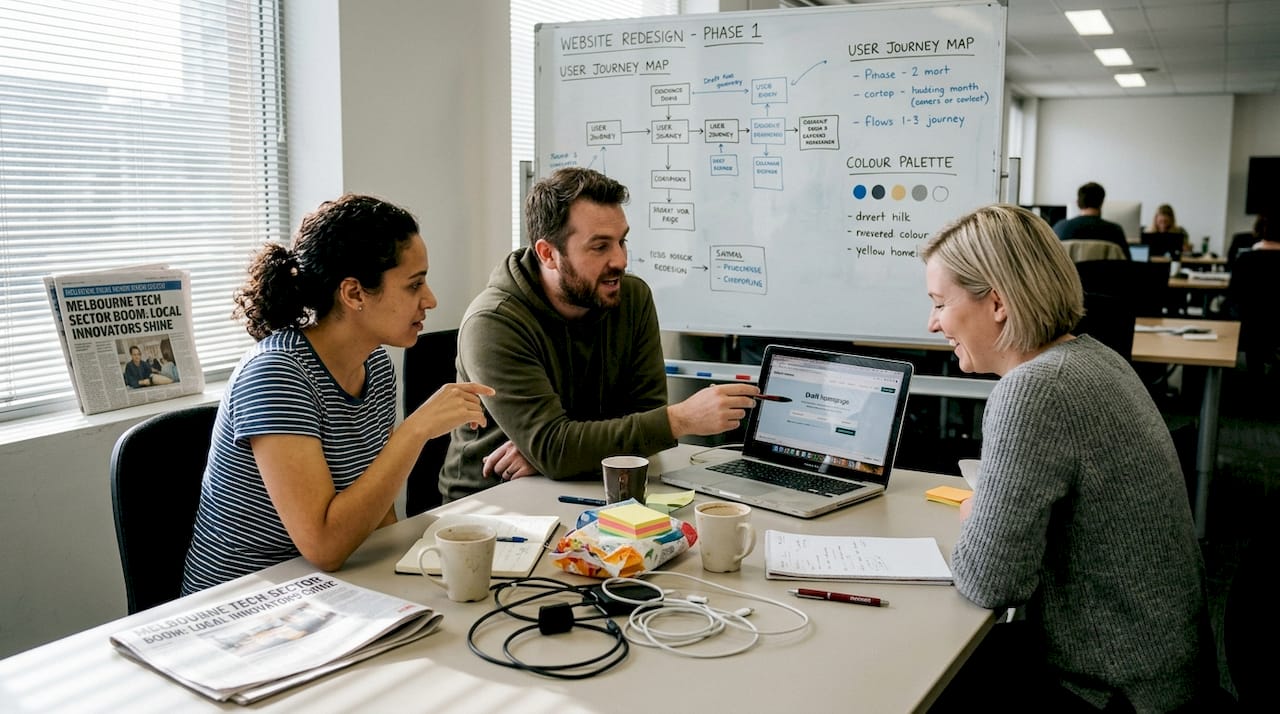
The fixed-price structure protects your budget from scope creep that plagues custom projects. One documented case showed a small business facing a $46,000 website redesign after initial quotes of $8,000 due to expanding requirements and poor project management. Package pricing eliminates this risk by clearly defining what’s included upfront. You know exactly what you’re paying and what you’ll receive.
Speed represents another crucial advantage. While custom websites can take 3-6 months from concept to launch, packages typically go live in 2-4 weeks. This rapid deployment means you start attracting customers and generating revenue sooner. For new businesses or those launching time-sensitive campaigns, this speed advantage can be decisive.
Package benefits include:
However, packages have limitations you should understand. DIY and templates limit SEO and scalability compared to fully custom development. Template-based sites may not rank as well for competitive keywords because they lack the technical optimisation and unique structure that search engines reward. If your business operates in a crowded market, this SEO limitation could impact your visibility.
Customisation constraints represent another trade-off. While developers can modify colours, fonts, and layouts within template frameworks, fundamental structural changes may not be possible. If your business requires unique user flows, complex integrations, or specialised functionality, you might outgrow package limitations. Custom development offers full control but at 2-5 times the cost and longer timelines.
| Factor | Website packages | Custom development |
|---|---|---|
| Cost | $2,000-$12,000 | $10,000-$50,000+ |
| Timeline | 2-4 weeks | 3-6 months |
| Customisation | Moderate | Unlimited |
| SEO potential | Good | Excellent |
| Scalability | Limited | Unlimited |
| Maintenance | Included | Additional cost |
Pro Tip: Start with a package if you’re launching a new business or need to establish an online presence quickly. You can always migrate to a custom solution later once you’ve validated your business model and identified specific requirements.
Choosing between packages and custom development depends on your business size, growth plans, and feature complexity. Most Canberra SMBs with straightforward needs find business website packages provide excellent value. Businesses with unique processes, complex integrations, or plans to scale rapidly may benefit from custom development despite higher costs.
Website packages transform how Canberra small businesses reach and serve customers. 75.75% of SMEs have websites and 26% use e-commerce platforms to expand reach. This widespread adoption reflects the competitive necessity of online presence. Businesses without websites risk invisibility to customers who search online before making purchasing decisions.
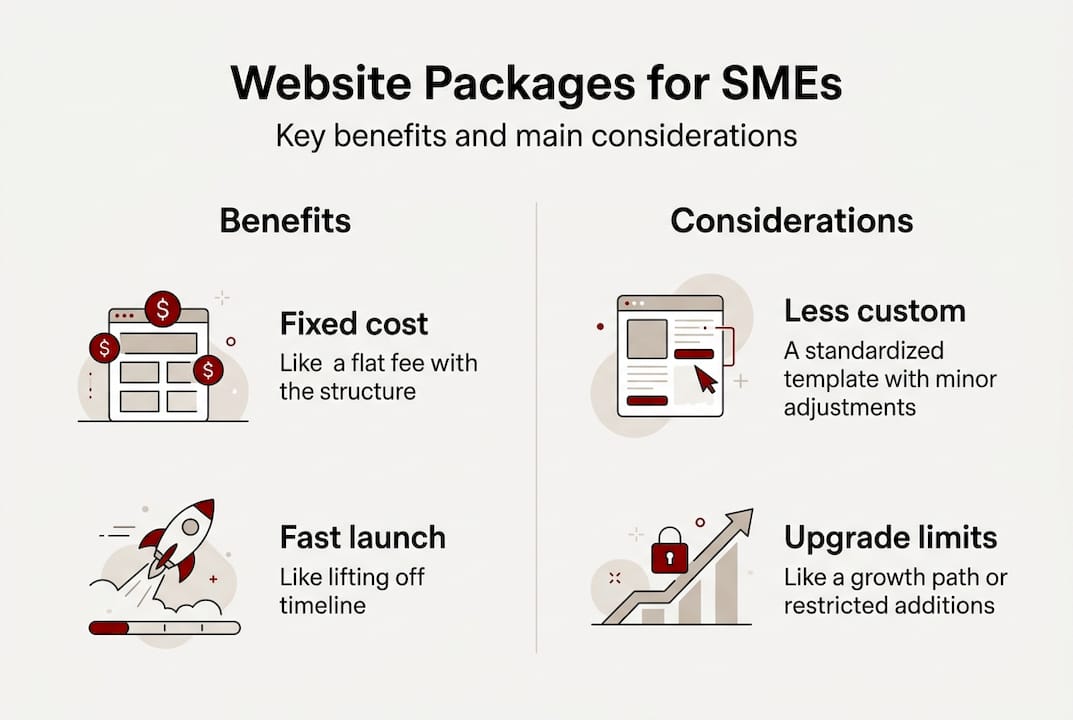
E-commerce functionality within packages opens new revenue streams for Canberra businesses. Local retailers can sell beyond their physical location, service providers can offer products alongside appointments, and specialists can reach niche markets across Australia. The data shows website use correlates with higher international business activity, suggesting even local businesses benefit from expanded digital reach.
Integrated booking systems solve a persistent challenge for service-based Canberra SMBs. Clients can schedule appointments 24/7 without phone calls or email exchanges. This convenience reduces administrative burden while improving customer experience. Automated reminders decrease no-shows, and online payment options streamline cash flow.
Fixed-price packages costing $3,000-$12,000 with hosting, SSL, SEO, mobile design help Canberra businesses compete cost-effectively. This investment delivers professional online presence comparable to larger competitors without enterprise budgets. Small businesses gain credibility through polished design and reliable functionality that builds trust with potential customers.
Key growth advantages include:
| Metric | Percentage | Impact for Canberra SMBs |
|---|---|---|
| SMEs with websites | 75.75% | Essential for competitive parity |
| SMEs using e-commerce | 26% | Growing channel for revenue expansion |
| Average package cost | $3,000-$12,000 | Accessible investment for most SMBs |
| Launch timeline | 2-4 weeks | Rapid market entry and testing |
Mobile-first design within packages addresses the reality that most customers browse on smartphones. Responsive layouts ensure your content displays properly regardless of device. This mobile optimisation directly impacts conversion rates, as poor mobile experience drives potential customers to competitors.
SEO-friendly structure helps Canberra businesses appear in local search results. When potential customers search for services in Canberra, Queanbeyan, or Googong, optimised websites rank higher. This organic visibility generates qualified leads without ongoing advertising costs. Combined with Google Business Profile optimisation, local businesses can dominate their geographic market.
“Digital services and platforms have become essential infrastructure for small businesses. They enable SMEs to reach customers, streamline operations, and compete with larger firms at a fraction of traditional costs.”
The competitive advantage extends beyond marketing to operational efficiency. Integrated systems reduce manual data entry, automated workflows handle routine tasks, and analytics provide insights for business decisions. These efficiency gains compound over time, allowing small teams to serve more customers without proportional cost increases.
Selecting the right package requires honest assessment of your current needs and future growth plans. Start by listing essential features your business requires today. Do you need e-commerce to sell products? Will customers book appointments online? Do you require membership areas or client portals? Prioritise must-have features over nice-to-have additions.
Evaluate packages using this framework:
Compare package features against costs, prioritising fixed-price options to avoid scope creep. Request detailed breakdowns of what’s included and what costs extra. Some providers charge separately for content creation, image sourcing, or additional pages beyond the package limit. Understanding total costs prevents budget surprises.
Focus on total cost of ownership over 3-5 years, including ongoing hosting, security updates, and content changes. A cheaper package might cost more long-term if support and maintenance carry high fees. Calculate annual costs for hosting, SSL certificates, plugin updates, and anticipated content changes.
Key selection criteria include:
Pro Tip: Ask potential providers about their upgrade path. Can you start with a basic package and add e-commerce later? What does migration to a more robust solution look like if your business grows rapidly?
Test key conversions before scaling up. Launch with essential features, monitor how visitors use your site, then add complexity based on actual behaviour rather than assumptions. Analytics reveal which pages customers visit, where they exit, and which calls-to-action they ignore. This data-driven approach prevents investing in features customers don’t use.
Prioritise mobile-first design and strong SEO for sustainable growth. More than 60% of web traffic comes from mobile devices, making responsive design non-negotiable. Similarly, SEO determines whether potential customers find your site through search engines. These foundational elements deliver long-term value regardless of other features.
Fixed-price packages are recommended to avoid unexpected scope creep and maintain predictable maintenance costs. Ensure contracts specify exactly what’s included, revision limits, and processes for handling additional requests. This clarity protects both parties and sets realistic expectations.
Consider these questions during provider selection:
Review website support options carefully. Understand what’s covered under standard support versus billable work. Many businesses underestimate the importance of reliable support until they face downtime or security issues. Quality support prevents small problems from becoming business-critical emergencies.
Investigate hosting arrangements included in packages. Where are servers located? What’s the uptime guarantee? How are backups handled? Australian-hosted sites often load faster for local customers and may offer compliance advantages for certain industries. Understanding hosting details helps you assess reliability and performance.
Finally, recognise that WordPress sites require ongoing maintenance for security and performance. Even the best package needs regular updates, security monitoring, and performance optimisation. Factor these ongoing needs into your decision, whether handled by your provider or managed internally.
Asporea Digital offers Canberra small businesses fixed-price website packages designed specifically for local market needs. Our packages bundle design, development, hosting, security, SEO, and ongoing support into transparent pricing that eliminates budget surprises.
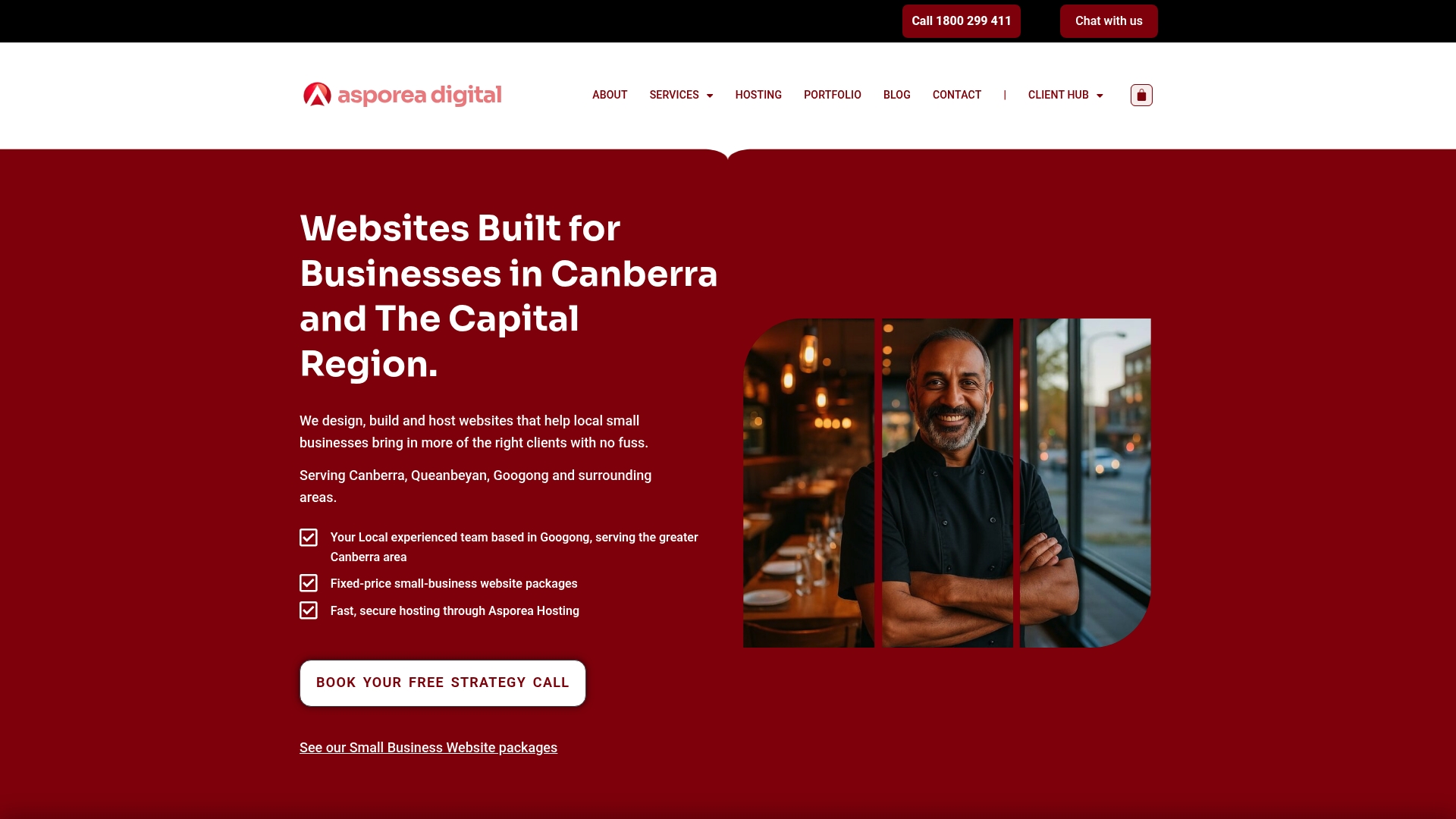
We specialise in creating custom WordPress solutions that include e-commerce and booking functionality tailored to your business model. Our approach focuses on building a clear path to purchase that guides visitors from initial interest to completed transactions. Every site includes comprehensive security measures and Australian-based hosting for optimal performance.
Whether you need a professional presence, online store, or booking system, our packages scale with your business. Contact Asporea Digital to discuss which package fits your Canberra business goals and budget.
Most affordable website packages include 5-10 pages, mobile-responsive design, content management system, SSL certificate, basic SEO, contact forms, and first-year hosting. Mid-tier packages add e-commerce or booking systems, while premium options include custom integrations and membership areas.
Website packages typically launch in 2-4 weeks from project start to going live. This timeline includes strategy, design approval, development, testing, and training. Custom websites take 3-6 months by comparison, making packages ideal when you need online presence quickly.
Most packages allow feature additions after launch, though complex customisations may require upgrading to custom development. Start with essential features, then add functionality based on actual customer behaviour and business growth. Discuss upgrade paths with providers before committing to ensure flexibility.
Ongoing costs typically include annual hosting ($200-$600), SSL certificate renewal ($0-$150), plugin updates, content changes, and support. Many packages include first-year hosting and basic support, with clear pricing for subsequent years. Budget $500-$1,500 annually for maintenance depending on complexity.
Packages include SEO-optimised structure that helps you rank in local searches, mobile-friendly design that converts smartphone visitors, and professional credibility that builds trust. E-commerce and booking features remove friction from purchasing, while 24/7 availability captures customers outside business hours. Combined, these elements increase both visibility and conversion rates.

Help January customers choose with confidence by aligning your products with what they want at the start of a new year.

Time-poor owners, spot fake invoices in email and online before you pay. Learn quick checks and safer habits to protect your cash flow.
A plain English guide to the WordPress fields that shape what Google shows: permalinks, titles, slugs, headings and excerpts, plus how redirects keep old links