Blog

All About AI connectors in WordPress 7
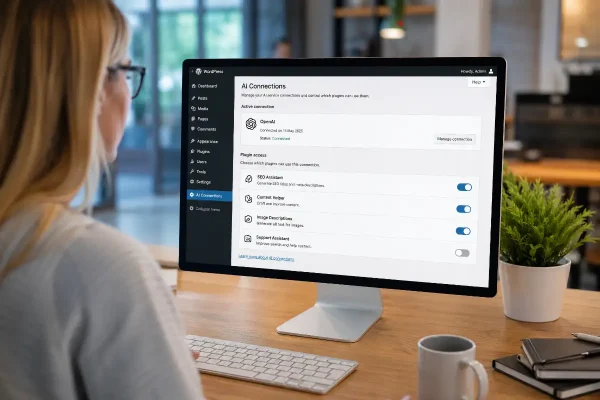
WordPress 7 AI connectors may help small businesses manage AI tools, content support, SEO and website controls more safely.

Building a membership website can be a smart move, but only if the idea is strong enough to support ongoing subscriptions.
A lot of membership sites are built too early. The website goes live, the offer sounds promising, and then reality arrives wearing steel-capped boots. Content runs thin, the value feels vague, and members drift away.
Before you build, you need clarity.
These 10 questions will help you pressure-test your idea, sharpen your offer, and work out whether you are genuinely ready to launch a membership website.

This is the first and most important question.
People are not paying just because you have knowledge. They are paying for access to something valuable. That might be content, community, guidance, tools, accountability, or a clear path to a result.
If you cannot explain the offer simply, the membership will feel fuzzy. And fuzzy offers do not sell well.
Your website will only convert if the value is obvious.
A membership needs to lead somewhere.
What changes for the member after joining? Do they learn a skill, solve a problem, save time, gain confidence, or get ongoing support?
If the outcome is unclear, people will hesitate to join and even more quickly question why they are staying.
The stronger the outcome, the stronger the membership.
Trying to appeal to everyone usually weakens the offer.
A membership site needs a clear audience. Beginners need something different from experienced professionals. Hobbyists need something different from business owners. People with different needs expect different kinds of content and support.
When you know exactly who the membership is for, it becomes much easier to shape the content, message and structure of the website.
This is where many good-looking ideas fall apart.
It is one thing to have a handful of ideas. It is another to keep producing valuable content month after month. A membership site depends on ongoing delivery, not a burst of early enthusiasm.
Ask yourself whether you could map out the first three to six months of content without scraping the barrel. If that feels hard, the idea may need more development before the website is built.
Knowing a lot about a topic is not the same as teaching it well.
A membership site works best when the content feels organised and intentional. Members should be able to see where to start, what comes next, and how different topics fit together.
If your content is likely to feel random or disconnected, members will struggle to see value. Good structure improves both the member experience and the effectiveness of the website.
Getting members to join is only half the job. The other half is giving them a reason to stay.
Will you offer fresh content, ongoing support, live sessions, updated resources, community access, or something else that builds continuing value?
If a member can consume everything quickly and leave, the model becomes hard to sustain. Retention should be considered before launch, not after people start cancelling.
A membership website is a commitment, not just a launch.
You need a realistic publishing rhythm. Weekly, fortnightly or monthly can all work, as long as the schedule matches your actual capacity.
A membership built on overpromising will quickly become stressful. A sustainable pace is far better than a heroic plan that collapses by month two.
A membership idea is stronger when there is evidence behind it.
Have people engaged with your posts, articles, videos or emails? Do they ask questions, request more detail or come back for more? Have you already seen signs that your knowledge solves a real problem?
These are useful proof points because they show that interest exists beyond your own belief in the idea.
A membership website still needs traffic.
How will people discover you? Through search, social media, email, partnerships, speaking, referrals, or an existing audience? And once they land on the site, will it be obvious what the membership offers and how to join?
Even a great membership can struggle if the path from discovery to sign-up is unclear.
The website itself needs to do more than look good.
A membership website should clearly explain the offer, make joining easy, organise content properly, manage subscriptions, and create a smooth experience for members after login.
The website is not the business model, but it does need to support it. If the site is confusing, clunky or unclear, it can undermine a strong offer very quickly.
A successful membership website starts with strong answers to the right questions.
If you can clearly define the value, the outcome, the audience, the content plan and the long-term model, you are in a much better position to build something that lasts.
If you cannot, that is not failure. It is useful information.
It is far better to pressure-test the idea now than to launch a membership site that looks polished on the outside but feels thin once people join.
If you are serious about launching a membership site and want a website that supports subscriptions, content delivery and long-term growth, visit our membership website page to see how Asporea Digital can help.

WordPress 7 AI connectors may help small businesses manage AI tools, content support, SEO and website controls more safely.

Stop scrambling when something breaks. Know who owns domain, DNS, hosting, email and payments, and keep access and support details in one place.

A writer’s website builds credibility before the book deal. Build your writer website to intentionally to grow with your audience.