
Blog

Holiday Incident Plan: Be prepared for when your site breaks
Plan for outages over Christmas. Build your holiday incident plan to manage technical, customer and content cover with tested access and clear escalation.

For fiction writers at the beginning of their careers, a website often matters earlier than expected.
A manuscript still carries the real weight, but the way a writer is presented has a quiet influence on how that work is received. When an author has a clear, thoughtful online presence, the impression is different from the outset. There is a stronger sense of direction, a sharper feeling of identity, and a more convincing sense that this is someone building a body of work rather than simply hoping to be discovered.
At Asporea Digital, we see author websites as part of that foundation. The best ones are not overbuilt, crowded or trying too hard. They create confidence. They help a writer look established before the larger milestones arrive, and they provide a structure that can carry far more once the career begins to move.

Early in a writer’s journey, people are rarely looking for a long explanation. Most visitors want to understand, fairly quickly, who this writer is, what kind of fiction they create, and whether the whole thing feels coherent.
That is where a website does its best work. Social media can show fragments of personality, but a website creates a full impression. The tone is more controlled, the presentation is more settled, and the writer has a space that feels intentional rather than temporary. For agents, publishers, event organisers, podcasters, journalists and curious readers, that matters more than many new writers realise.
A strong website helps the author feel easier to place in the market. It gives shape to the brand before the market does it for them. That kind of clarity can be valuable at a very practical level, because fiction is not only sold on talent. It is also sold on confidence, positioning and the sense that a writer can grow into public attention without needing to be rebuilt from scratch.
The most effective writer websites feel clear almost immediately.
Within a few moments, the visitor should have a sense of the author’s voice, genre and presence. That does not mean the website needs to explain everything in blunt terms. Atmosphere carries weight. Language carries weight. Visual choices carry weight. Together, they should create an impression that feels specific enough to be memorable.
A well-written homepage usually does more than any oversized biography ever could. The visitor needs to feel that the writer knows who they are and how they want to be read. From there, the supporting pages should deepen that impression rather than compete with it. An author bio should feel confident and well judged. Contact details should be easy to find. A newsletter signup should sit naturally within the experience, not look like an afterthought.
What matters most is that the whole website feels aligned. When the writing, layout, imagery and structure all pull in the same direction, the author brand becomes far easier to trust.
Much of the long-term value comes from decisions made early.
Naming is one of the first. A real name, a pen name, or a variation of either will shape the domain, the search presence and the consistency of the brand across every future platform. A rushed choice here tends to create problems later, particularly once the writer starts being mentioned publicly, linked in media coverage or searched by readers after an event or article.
Positioning matters just as much. A fiction writer does not need a grand statement pasted across the homepage, but they do need a recognisable place in the market. Visitors should come away with a sense of what kind of reading experience this author creates and why that experience will appeal to a particular audience. Without that clarity, even a beautifully designed website can feel vague.
Structure is another quiet decision that pays off later. A writer who is unpublished today may need book pages, event information, endorsements, rights enquiries, launch updates, media assets and reader extras within a year or two. A website built with growth in mind can absorb those additions naturally. One built as a placeholder usually starts to crack the moment real attention arrives.
For fiction writers, audience proof rarely appears in one dramatic burst. More often, it builds steadily through small signs of genuine interest.
A mailing list is one of the strongest examples because it reflects active choice. When someone subscribes, they are giving the writer permission to stay in touch. Over time, that relationship becomes meaningful. Reader interest can also be seen in the way people move through the website itself. Sample chapter downloads, visits to book or project pages, replies to newsletter content, clicks on launch updates and engagement with reader resources all begin to tell a story.
That story becomes commercially useful because it is grounded in behaviour rather than surface-level visibility. Plenty of writers collect followers. Far fewer build an audience that actually pays attention. A good website helps capture that deeper layer of interest and turns it into something the writer can track, learn from and build on.
As that audience grows, the website starts to do more than introduce the author. It becomes a record of momentum. Readers return for updates. Media contacts find what they need quickly. Industry people can see that attention is forming around the work in a way that feels real and sustainable.
Once the core is right, a fiction writer’s website can carry far more than the basics.
Exclusive content is often one of the most effective additions because it gives readers a reason to stay close. That might be a short story, a sample chapter, background notes, bonus material or a private update for subscribers. Thoughtful extras like these can deepen reader connection while also strengthening the sense that the author’s world extends beyond a single book page.
Media features also become easier to manage when the website is properly planned. A polished bio, current imagery, interview topics, event details and coverage links all help the author look more prepared and more professional. Over time, those details accumulate into something much more powerful than decoration. They create substance around the brand.
Care matters here. Every addition should feel connected to the same voice and the same direction. Readers notice when a website feels stitched together in stages with no real consistency. A stronger result comes from treating the website as a living extension of the author brand, where each new element strengthens what is already there.
From a marketing point of view, a fiction writer’s website creates a home for future visibility.
Readers need somewhere to land when curiosity begins. Industry contacts need somewhere reliable to learn more. Search results need somewhere credible to point. Without that foundation, attention tends to scatter. With it, interest has somewhere to settle and grow.
That is why the website matters so much for emerging authors. Long before a launch campaign exists, the foundations of discoverability, credibility and audience growth can already be in place. A writer with a strong website appears more ready because they are more ready. The platform is there. The structure exists. The identity has shape.
For authors who want to build their careers with intention, that early advantage is worth taking seriously.
At Asporea Digital, we design websites for writers who want more than a placeholder. We create thoughtful, strategic online homes that support the author brand now and scale with the opportunities ahead. If you are building your writing career and want a website that feels credible from the start, Asporea Digital can help you create one that grows with you.

Plan for outages over Christmas. Build your holiday incident plan to manage technical, customer and content cover with tested access and clear escalation.

DIY websites look cheap until you see the real cost: nights, weekends, missed leads, and the rescue job when something breaks.
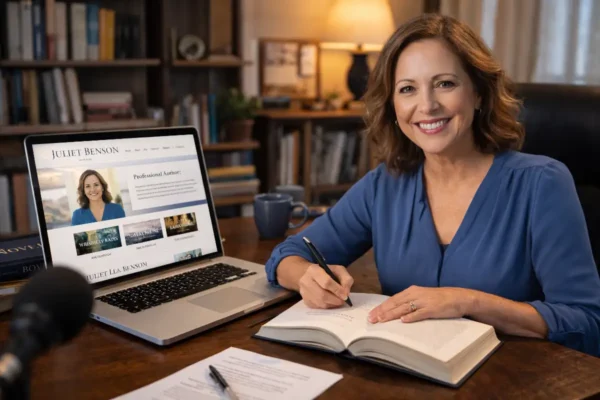
Why authors need a website to build credibility, showcase books, grow readers and create a professional online presence.