
Blog

The real cost of a DIY Squarespace website
DIY Squarespace can look cheap, but hidden costs, owner time and growth limits can make WordPress the smarter long-term choice.

TL;DR:
- Optimizing your website for local search involves making deliberate, structured changes to increase visibility to nearby customers actively seeking your services.
- Key factors include maintaining a well-optimized Google Business Profile, creating accurate location-specific pages, managing reviews consistently, and ensuring your website is technically sound with mobile responsiveness and fast load times.
Optimising your website for local search means making deliberate, structured changes to your site and online presence so that Google shows your business to nearby customers who are actively looking for what you offer. 46% of all Google searches carry local intent, which means nearly half of every search on Google is an opportunity for a local business to appear. Local SEO, the recognised industry term for this practice, covers everything from your Google Business Profile to your page speed, your review count, and the way your address appears on your website. Get these foundations right and your visibility in local search results improves steadily and sustainably.
Your Google Business Profile (GBP) is the single most powerful signal in Google’s local ranking algorithm. GBP signals carry significant weight in local pack rankings, with your primary category being the most critical relevance factor. If your category is wrong or too broad, Google may not show your listing for the searches that matter most to your business.
To fully optimise your GBP, work through each of these fields carefully:
Ongoing activity on your GBP also matters. Posting updates, responding to Q&A, and replying to reviews all signal to Google that your business is active and trustworthy. Aim to respond to every review within 48 hours, whether it is positive or negative. A thoughtful reply to a critical review often builds more trust than a string of five-star responses with no engagement.
One common mistake is using a call-tracking phone number on your GBP. Tracking numbers confuse Google’s NAP consistency checks and can weaken your local rankings. Use your actual local area code number everywhere.
Pro Tip: Match your business name, address, and phone number on your GBP exactly to what appears on your website. Even small differences like “St” versus “Street” can create inconsistency signals that reduce your local ranking.
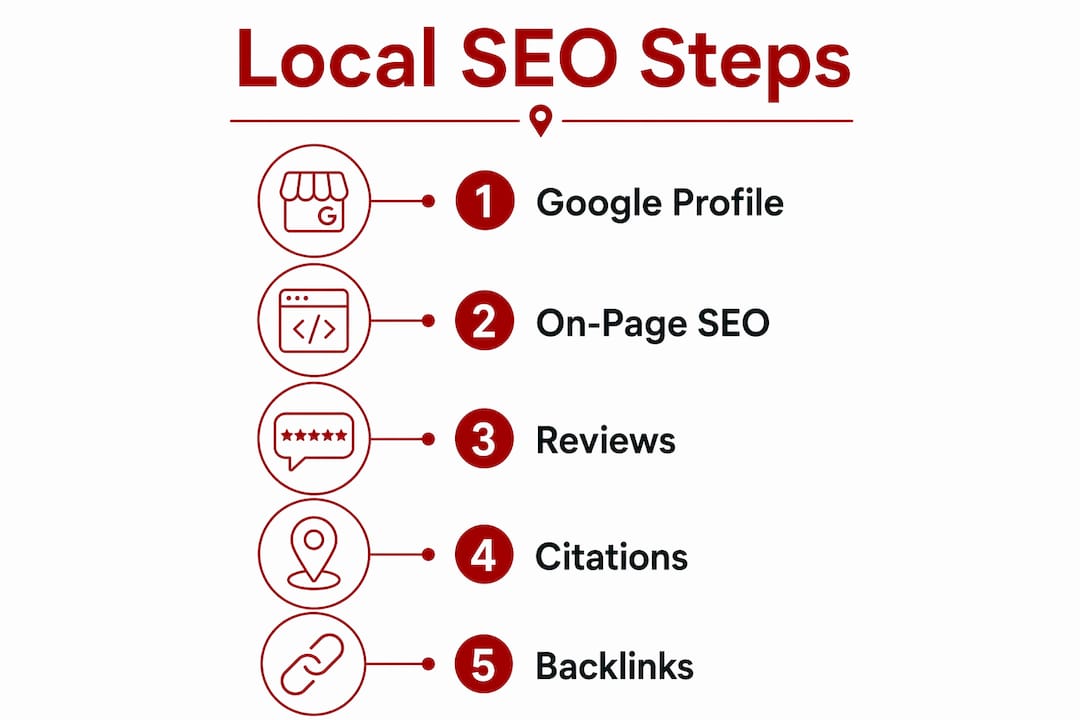
Your website reinforces or undermines every signal your GBP sends. Google cross-references your site to verify that your business is real, located where you say it is, and relevant to the searches you want to rank for. Getting your on-page local SEO right is not complicated, but it does require attention to detail.
Follow these steps in order:
Pro Tip: When writing location pages, include references to local landmarks, suburbs, and community organisations. A page that mentions Civic, Woden, or the Tuggeranong Town Centre reads as genuinely local to both Google and your customers.
The table below summarises the core on-page elements and their primary purpose:
| On-page element | Primary purpose |
|---|---|
| Local keyword in title tag | Signals relevance to location-specific queries |
| Plain text NAP | Allows search engines to verify business details |
| Unique location pages | Targets suburb and area-specific searches |
| LocalBusiness schema | Provides structured data for Google’s local algorithm |
| Embedded Google Map | Confirms physical location on the page |

Trust signals are the third pillar of local SEO, sitting alongside your GBP and your website. Google measures your prominence partly by how often your business is mentioned, reviewed, and linked to across the web.
Reviews carry real weight. Consistent weekly review acquisition outperforms a one-time burst of reviews followed by months of silence. Build review generation into your routine. Send a follow-up email after each job with a direct link to your Google review page. Use a QR code on invoices or at your reception desk. An SMS request sent within an hour of a completed service has a noticeably higher response rate than an email sent days later.
Citations are mentions of your business name, address, and phone number on other websites. Consistency across directories is what matters. Your NAP must be identical on Google Business Profile, Apple Maps, Bing Places, Yelp, and any industry-specific directories relevant to your sector. A Canberra trades business, for example, should also appear on HiPages and ServiceSeeking. Duplicated or inconsistent listings confuse Google and dilute your ranking signals.
Backlinks from local sources carry more weight than generic links from unrelated websites. Quality local backlinks from community organisations and local partnerships outperform a high volume of irrelevant links. Practical ways to earn them include sponsoring a local event, contributing a guest article to a Canberra business publication, or partnering with a complementary local business for a joint resource page.
The comparison below shows which citation sources to prioritise:
| Citation source | Priority level |
|---|---|
| Google Business Profile | Critical |
| Apple Maps and Bing Places | High |
| Yelp and True Local | Medium |
| Industry-specific directories | Medium |
| Local chamber of commerce | High |
Pro Tip: Run a free audit on Moz Local or BrightLocal to identify where your NAP is inconsistent across directories. Fixing even five or six mismatches can produce a measurable improvement in local rankings within a few weeks.
Technical issues on your website can quietly cancel out all the work you do on GBP, reviews, and content. Google cannot rank a site it struggles to crawl, and users will not stay on a site that loads slowly or breaks on mobile.
The foundations to check and maintain are:
are more useful than/page?id=47`. Descriptive URLs help both Google and your visitors understand the page before they click.For a deeper look at how effective service websites handle these technical requirements, the principles apply directly to local search performance.
Local SEO success requires consistent, coordinated effort across your Google Business Profile, website content, technical foundations, and off-site trust signals working together.
| Point | Details |
|---|---|
| GBP is your ranking foundation | Select a precise primary category and keep your profile active with posts, photos, and review responses. |
| NAP must be plain text | Display your business name, address, and phone number as readable text on every relevant page. |
| Location pages drive area rankings | Create individual pages for each suburb or service with at least 500 words of unique local content. |
| Reviews need a steady routine | Request reviews weekly through email, SMS, or QR codes rather than in occasional bursts. |
| Technical health underpins everything | A mobile-responsive, fast-loading, HTTPS site is the minimum standard for local search visibility in 2026. |
Local SEO is one of those areas where the fundamentals genuinely work, but most small businesses skip them because they seem too simple. I see it regularly. A business owner spends time chasing backlinks or worrying about algorithm updates, while their GBP still has the wrong primary category and their website displays the address as an image inside a footer graphic.
The businesses that see the most consistent improvement are the ones that treat local SEO as a routine rather than a project. They respond to reviews every week. They update their GBP when something changes. They add a new service page when they expand into a new suburb. Small, steady habits create a strong foundation that compounds over time.
One thing I would caution against is treating every new tactic as urgent. The 2026 algorithm updates reinforce the same signals that have mattered for years: relevance, proximity, and prominence. If you have not yet completed your GBP fully, that is more valuable than any new technique you might read about. Prioritise sequentially and you will see results without overwhelming yourself.
For Canberra businesses specifically, the local search environment is competitive but not saturated in most service categories. There is real opportunity for trades, allied health providers, consultants, and service businesses to rank well with a disciplined approach. You can read more about why local SEO matters for Canberra businesses if you want to understand the broader context before you start.
— James
If you are a Canberra small business owner and local search feels like a lot to manage on your own, Asporea Digital builds WordPress websites specifically designed to support local search performance from the ground up.
Every site Asporea Digital builds is mobile-responsive, fast-loading, and structured with the technical and content foundations that local SEO requires. That includes schema markup, clean URL structures, location pages, and NAP consistency built in from the start. If you want a website that does more than look professional, explore how WordPress supports local growth for Canberra businesses, or take a look at how modern website design translates directly into better local rankings and more enquiries.
Your Google Business Profile primary category is the single most powerful relevance signal in local search. Completing your full GBP profile and keeping it active with posts and review responses builds on that foundation.
Start with the basics: display your NAP as plain text, add your suburb and service keywords to your page titles and headings, and create a dedicated contact page with an embedded Google Map. A WordPress plugin like Yoast SEO or Rank Math handles schema markup without requiring code.
There is no fixed number, but consistent weekly review acquisition matters more than total volume. Businesses that gather a few reviews each week outperform those with a large number of old reviews and no recent activity.
Yes. Pages loading under three seconds meet Google’s mobile-first indexing standard and reduce bounce rates. Use Google PageSpeed Insights to identify and fix the specific issues slowing your site down.
A local citation is any mention of your business name, address, and phone number on another website, such as a directory or social profile. Consistent citations across platforms like Google, Apple Maps, Bing Places, and Yelp confirm your business details to Google and strengthen your local prominence signals.

DIY Squarespace can look cheap, but hidden costs, owner time and growth limits can make WordPress the smarter long-term choice.
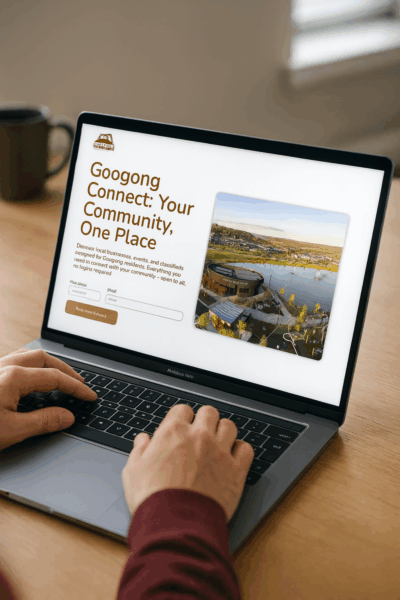
Discover Googong Connect, a new platform bringing residents, businesses and community groups together. Connecting everyone from 2026.
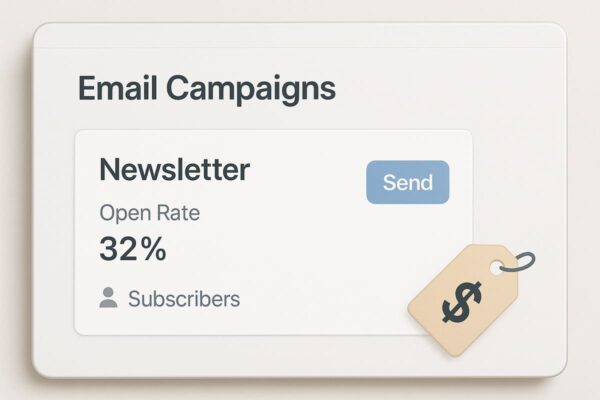
As email lists grow, pricing increases and platforms become harder to use, even though the work stays the same. This article looks at why that