Blog

All About AI connectors in WordPress 7
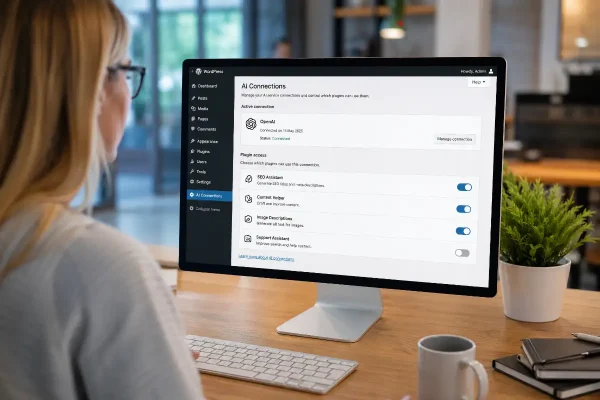
WordPress 7 AI connectors may help small businesses manage AI tools, content support, SEO and website controls more safely.

A community-oriented web service is an online platform built to serve the specific needs and social cohesion of a group, rather than to generate traffic or profit. Unlike a standard business website or social media feed, these platforms prioritise user-driven interaction, peer support, and shared purpose. The field is sometimes called Community-as-a-Service (CaaS), a model that gives organisations full data control while enabling members to actively shape the platform’s direction. If you are an organisation or individual asking what is community-oriented web service, the short answer is this: it is a digital space where the community itself is the product, not the audience.
A community-oriented web service is defined as a digital platform that prioritises community needs over commercial aims, embedding interaction, co-creation, and mutual support into its core structure. This distinguishes it clearly from a back-end API, a standard brochure website, or a social media profile, all of which treat visitors as passive consumers.
The operational structure typically includes several interconnected layers. Discussion forums let members ask questions, share knowledge, and respond to each other without waiting for an administrator to post content. Event management tools allow the community to organise and attend gatherings, both online and in person. Peer support systems create space for members to offer help based on lived experience rather than professional authority alone.

Moderation is where many platforms struggle. AI-assisted moderation now enables safe community growth without significantly increasing costs, but it works best when paired with human oversight. A community manager who understands the group’s culture will catch what an algorithm misses.
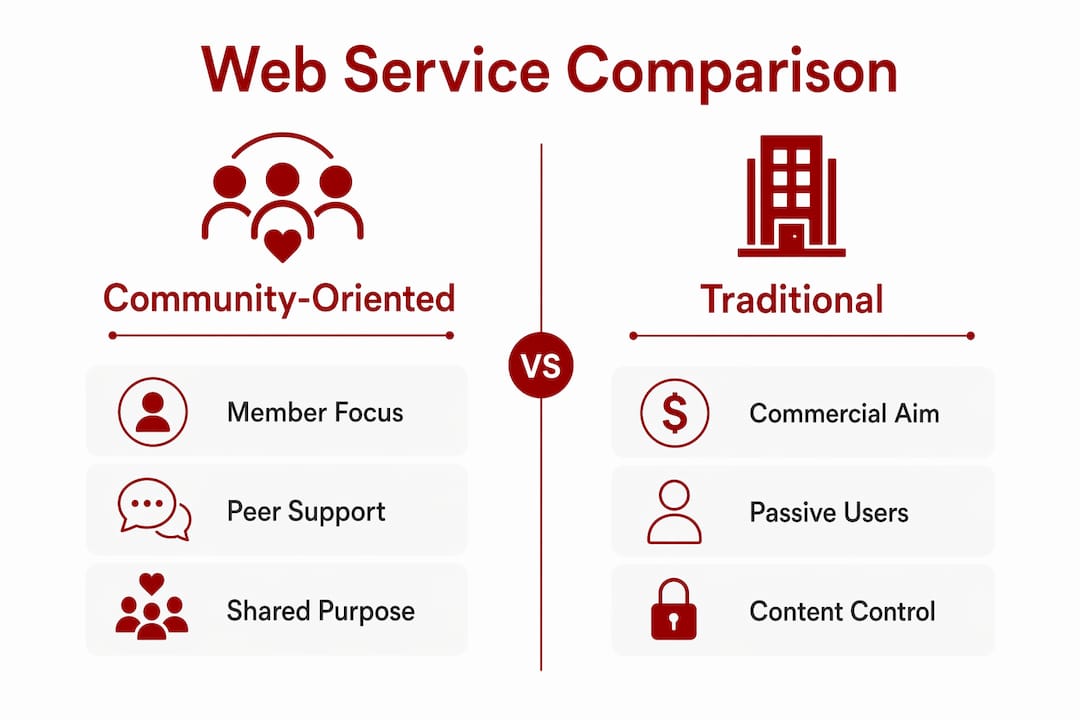
The table below shows how a community-oriented web service differs from a traditional web service across key features.
| Feature | Community-oriented web service | Traditional web service |
|---|---|---|
| Primary purpose | Member interaction and shared support | Information delivery or sales |
| Content creation | Member-driven and co-created | Organisation-controlled |
| Moderation | Active, human and AI-assisted | Minimal or absent |
| Engagement model | Participatory and ongoing | Passive and transactional |
| Data ownership | Organisation retains full control | Varies, often third-party |
Pro Tip: Design your platform so members can start a discussion or post a resource without needing admin approval. Friction at the contribution stage is the fastest way to kill participation.
Community-oriented web services build trust in ways that traditional websites simply cannot. A 2025 study found that community resource hubs improve engagement and attendance, positively impacting trust even when clinical outcomes remain stable. That finding matters because it shows trust is built through repeated, meaningful interaction, not just through service quality alone.
For local organisations, the benefits go beyond goodwill. When members feel heard and supported, they return. They refer others. They contribute content that reduces the burden on staff. The platform becomes self-sustaining in a way no static website ever could.
The Community-as-a-Service model takes this further. It converts passive readers into active members with a sense of ownership, which is a meaningful shift for not-for-profits, allied health providers, and local councils trying to stretch limited resources.
Key benefits for organisations and communities include:
The shift from sole provider to advocate and enabler is not just philosophical. It is practical. Organisations that step back from controlling every interaction find their communities grow faster and stay active longer.
The design philosophy behind a community-oriented web service is fundamentally different from what drives social media or a standard business website. Social media platforms are built to maximise time on site for advertising revenue. Traditional websites are built to convert visitors into customers. A community-oriented platform is built to empower members through co-creation and participatory governance.
This distinction shows up in every design decision. Who can post? Who can moderate? Whose voice shapes the direction of the platform? In a community-oriented model, the answers lean toward the members, not the organisation.
Co-creation is not optional. Experts stress that embedding social justice and participatory governance from the outset is what separates a genuine community platform from a branded forum with a logo. Organisations that bolt community features onto an existing commercial site often end up with a ghost town, a space that looks active but generates no real engagement.
Common pitfalls to avoid when designing these platforms:
Community stewardship shifts the organisation’s role from content controller to facilitator. That is a meaningful cultural change, not just a technical one. Organisations that make this shift successfully tend to see sustained participation. Those that do not tend to see their platforms go quiet within months.
Pro Tip: Bring three to five community members into the design process before you write a single line of code or choose a platform. Their input will prevent costly redesigns later and signal to the broader community that their voice matters from day one.
Building a community-oriented web service requires more than choosing the right platform. The strategy behind it matters as much as the technology. Building around a shared challenge rather than adding community features as an afterthought is the single biggest predictor of success.
Follow these steps to give your platform the best chance of lasting engagement.
Identify a clear unifying purpose. Define the shared challenge or interest that will bring people together. Communities without a unifying purpose risk becoming inactive despite solid technical infrastructure. Be specific. “Local health professionals in Canberra navigating NDIS changes” is a purpose. “People interested in health” is not.
Co-design with community members. Invite a small group of future members to help shape the platform’s structure, tone, and rules. This builds early ownership and surfaces practical needs you would not have anticipated alone. A socio-technical ecosystem designed with community input is more sustainable than one designed for the community.
Choose technology that fits the community, not the other way around. WordPress with membership and forum plugins suits many local organisations because it is flexible, cost-effective, and keeps data on your own server. Consider what features your community actually needs: forums, event calendars, resource libraries, or private messaging. Refer to a features guide for service websites to assess what is worth building.
Appoint human facilitators before launch. Automation cannot replace community leadership, especially in the early stages. Assign at least one person whose role is to welcome new members, prompt discussion, and model the behaviour you want to see. AI moderation can handle scale, but a human sets the culture.
Establish a clear value exchange. Members need to feel they gain more than they give. Sustainable community platforms are built on reciprocal benefit. Be explicit about what members receive: access to expertise, peer support, early event invitations, or professional development resources.
Plan for ongoing management from day one. A community platform is not a set-and-forget website. Budget for regular moderation, content seeding, and community health checks. The role of community websites in local connection is an ongoing commitment, not a one-time build.
Measure participation, not just traffic. Track how many members post, respond, and return within 30 days. Traffic numbers tell you how many people arrived. Participation numbers tell you whether the community is actually working.
A community-oriented web service succeeds when it is built around a genuine shared purpose, co-designed with members, and supported by both human facilitation and appropriate technology.
| Point | Details |
|---|---|
| Definition is distinct | A community-oriented web service prioritises member interaction and shared purpose, not traffic or sales. |
| Co-creation is non-negotiable | Platforms designed without community input tend to stagnate quickly, regardless of technical quality. |
| Trust builds through interaction | Repeated, meaningful engagement increases trust more reliably than polished content alone. |
| Human facilitation matters | AI moderation supports scale, but a human community leader sets the culture at launch. |
| Value exchange sustains engagement | Members stay active when they consistently receive more than they contribute. |
If your organisation is ready to move beyond a static website and build something your community will actually use, Asporeadigital works with Canberra businesses, not-for-profits, and local organisations to design and build WordPress platforms that support genuine engagement.
Asporeadigital builds membership sites, resource hubs, and community-focused websites with the features that matter: forums, event management, moderated peer support, and mobile-ready design. Their WordPress digital marketing approach is built around business outcomes, not just aesthetics. Ongoing website support keeps your platform secure, fast, and functioning as your community grows. Contact Asporeadigital directly to discuss a community-oriented web service built for your specific audience and goals.
A community web service is a digital platform designed to prioritise member interaction, peer support, and shared purpose over commercial or traffic-driven goals. It typically includes forums, event management, and moderated participation tools.
Social media platforms are built to maximise advertising revenue through passive consumption. A community-oriented web service gives the organisation full data control and puts member needs, co-creation, and participatory governance at the centre of its design.
Community-focused websites commonly include discussion forums, event calendars, peer support systems, resource libraries, and moderation tools. The most effective platforms combine AI-assisted moderation with human community leadership.
The most common cause of failure is a lack of unifying purpose. Platforms built without a clear shared challenge or genuine value exchange for members tend to go inactive quickly, regardless of how well they are technically built.
Yes. WordPress-based platforms with membership and forum functionality are well within reach for small organisations. The key is starting with a clear purpose, involving community members in the design, and budgeting for ongoing facilitation and support.

WordPress 7 AI connectors may help small businesses manage AI tools, content support, SEO and website controls more safely.

Packages or custom? See each stage from discovery to launch, what you provide, and how we keep Canberra region builds on track.

Faster sites keep customers longer. Asporea Digital helps Canberra businesses tune and maintain their websites for speed and reliability.