Blog

A One Minute Check to See If Spam Is Winning
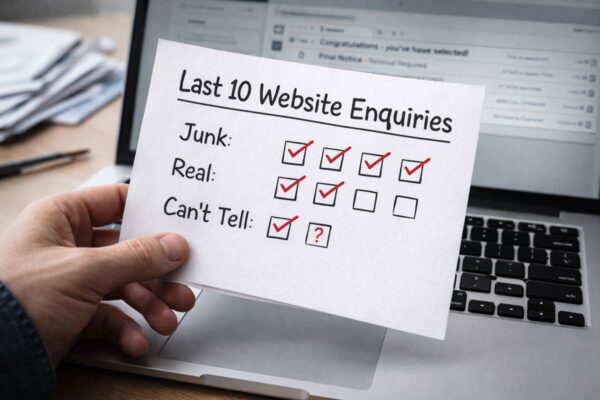
Count your last 10 enquiries. Spot where spam is leaking in, and see if real customers are getting buried.

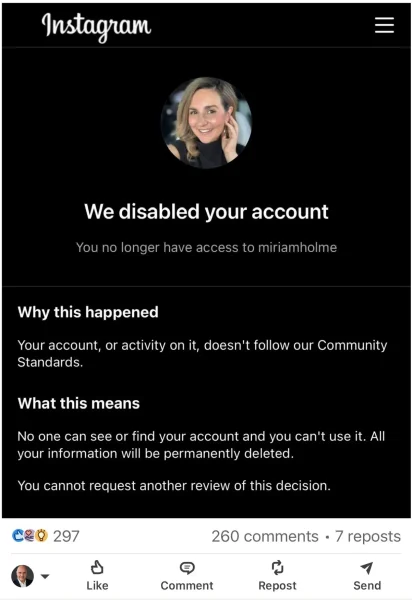
An accountant named Miriam Holme recently shared confronting screenshots showing a network of Facebook and Instagram accounts being disabled. Personal accounts. Business accounts. Meta Connected accounts. The message was blunt. The accounts were disabled, the decision was final and the content would eventually be deleted.
The details of what happened will probably be argued for weeks. Meta may have made a mistake. There may be information the public cannot see.
So many business owners reacted to the story, because they saw the risk for themselves immediately.
Most businesses have spent the last decade being encouraged to build audiences on social media. It makes sense. Customers are already there. The barrier to entry is low. A business can create a page in minutes and start building visibility without spending tens of thousands of dollars on marketing. For many businesses it works remarkably well. Customers discover them through a Meta service. Inquiries arrive through Instagram. Recommendations are shared through community groups. Reviews accumulate. The audience grows.
That version of “success” is actually a trap.
When customer attention, customer conversations and customer history all end up sitting inside the same platform. The business owner still thinks they own the relationship because the customers know their name and follow their content. In reality, the relationship exists inside somebody else’s system and is governed by somebody else’s rules.
And while it’s all working, nobody thinks about it.
When Meta no longer works, it forces business owners to confront a question they should have asked themselves much earlier: If access disappeared tomorrow, what would this mean for me?
Some businesses would be irritated and move on. Others would lose their primary source of enquiries overnight. Some would discover that years of customer interaction, reviews, messages and content were concentrated in a single place they did not control.
The irony is that many of those businesses already own the solution.
They have a website.
The problem is that the website has often been treated as a digital brochure while the real business activity migrated elsewhere. The Facebook page became the community. Instagram became the showroom. Messenger became customer support. The website remained online, but it stopped being the centre of the business.
That’s the mistake.
Facebook is going away and Instagram still has value, the problem is allowing a platform you don’t control to become the place where the entire customer relationship lives.
A website can never compete with Facebook for audience size. But it doesn’t have to, because the job of your website is to be the place customers can always find you. It’s where you get to explain your services properly. You collect customers and their enquiries there, and it’s where your content lives. Importantly it’s the one place where somebody can still do business with you even if a social media account disappears.
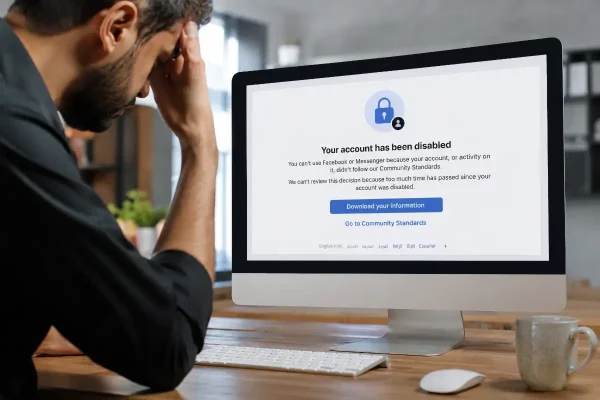
The businesses that are least affected by platform problems have one thing in common. Their social media presence points back towards assets they control. Visitors are encouraged to join a mailing list, read content on the website, make an enquiry or engage directly with the business.
Social media introduces the relationship. It does not own it.
it is the difference between minor annoyance and full-blown business crisis.
The most useful thing about Miriam Holme’s story is not the debate over whether Meta got it right or wrong. Most small businesses have no control over that outcome. The useful part is the reminder that a platform account is not a business asset in the same way a website, customer database or mailing list is.
Your website belongs to you.
Everything else belongs to somebody else.
When they stop working, this distinction becomes impossible to miss.
Count your last 10 enquiries. Spot where spam is leaking in, and see if real customers are getting buried.

Protect your business accounts with two-factor authentication. Learn how to add 2FA to your email, website, hosting, and WordPress logins.

Your website might look fine, but its technology could be holding it back. Learn why keeping WordPress, PHP and plugins current keeps your business faster,