Blog

Stop Searching Your Business Name: Try This Instead
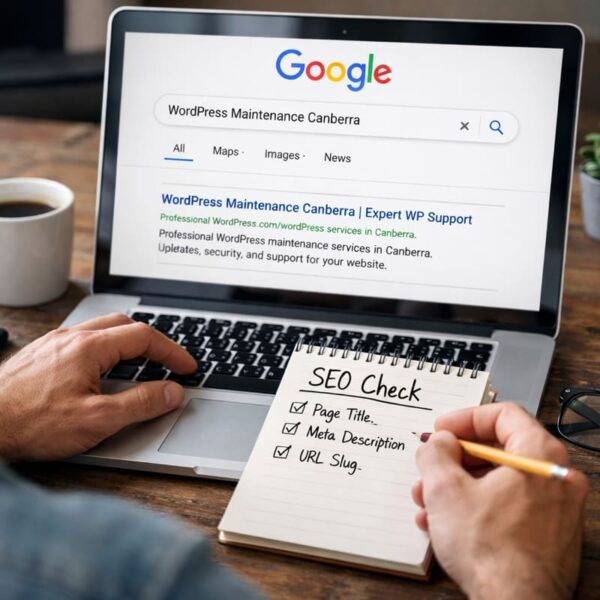
Stop searching your business name. Run a simple SEO check, fix your page title, description and slug, and help strangers find you.

A lot of business owners come to a new web developer carrying a story about the last one.
Sometimes it is a fair story. They were hard to reach. They overpromised. They made the website feel more confusing than it needed to be. They left things half-finished, poorly documented or difficult to maintain. They handed over a mess and called it complete.
That happens.
But “my last developer was hopeless” is usually only one side of the story.

The problem often started before the relationship became tense. It may have been in the rushed quote, the loose brief, the content that was not ready, the decisions that kept changing, the support arrangement nobody really understood, or the maintenance that was assumed but never actually included.
At the beginning, both sides can be tempted to make the project sound simpler than it is. The business owner may not want to overcomplicate the brief or push the price beyond what feels comfortable. The developer may avoid raising every risk, exclusion or unknown because they do not want to make the job sound difficult before trust has been built. The project starts with goodwill, but not always enough clarity. That may not cause a problem immediately, but once the work becomes more complex, the missing conversations begin to matter.
A contact form stops sending. A plugin needs a licence. A page needs rewriting. The site is slower than expected. The client asks for something they thought was obvious. The developer says it was not included. The client hears that as an excuse. The developer hears the client as unreasonable.
That is often where the relationship starts to change, not because anyone set out to be difficult, but because the agreement was too thin for the reality of owning a website.
A website is not just something you buy. It is something you become responsible for.
That responsibility is often underestimated. Most business owners are not thinking about DNS records, plugin conflicts, PHP versions, form deliverability, backup schedules, image compression, licence renewals or what happens when a third-party tool changes its rules. They are thinking about their business. They want the phone to ring, enquiries to come in, the site to look credible and everything to work when someone visits.
That is reasonable.
The difficulty is that a website still has a life after launch. It sits inside an ecosystem of hosting, software, updates, integrations, security and content. When that care has not been discussed properly, every later cost can feel like a surprise. A developer may think they are charging for work that was never included. A client may think they are being charged again for something they already paid for.
Both may be telling the truth.
That is the hard part.
A failed web relationship does not always mean someone was incompetent. Sometimes it means the relationship was never clear enough to survive pressure.
The website may have become more important than the original agreement allowed for. The business may have grown. The site may have become a lead source. The contact form may have become operationally important. The client may have wanted advice, not just delivery. The developer may have quoted for delivery, not advice.
Sometimes the issue is even more direct. The developer may have explained what needed to happen, the client agreed, and then the instruction was not followed. Content arrives in the wrong format. Images are uploaded at huge file sizes. Changes are made directly in the site after a layout has been approved. Plugin updates are ignored. A hosting account is changed without telling the person responsible for the website. Access is given to another provider, who makes changes without documenting them.
None of these things may look serious in isolation. But they create rework, troubleshooting and risk. That is when the client starts to wonder why the job is getting expensive, while the developer is trying to clean up avoidable problems.
Then the assumptions start costing money.
This is where cheap work can become difficult. Cheap does not always mean bad. A simple site on a modest budget can be perfectly fine when everyone understands what is being bought. The problem starts when a cheap arrangement is expected to behave like a full-service relationship.
That expectation gap can do real damage. Every invoice starts to feel suspicious. Every delay feels personal. Every explanation sounds defensive. The client checks in more often because they are anxious. The developer replies more carefully because they feel exposed. Nobody says clearly what they are worried about, so the relationship becomes smaller, less patient and less honest.
By the time the relationship ends, both sides usually have enough evidence to feel justified. The client can point to the missed calls, the unexplained invoices, the delays, and the moments where they felt ignored or talked down to. The developer can point to the changing brief, the late content, the extra requests, the instructions that were agreed to but not followed, and the decisions that were approved and then reopened.
Neither side is necessarily inventing the story. They are usually remembering the parts that hurt them most.
That is why the next conversation matters.
If a business owner walks into the next relationship needing the new developer to agree that the last one was terrible, not much has been learned. Sympathy might feel good, but it does not create a better working relationship. The more useful conversation is quieter and harder. It sounds less like a complaint and more like a reflection on what went wrong, what was not understood, where the business felt exposed, and what needs to be handled differently next time.
That kind of honesty gives the next relationship a chance. It moves the discussion away from blame and towards something more practical: how the work will actually be managed when money, timing, uncertainty and pressure enter the room.
Developers have their own responsibility here too. A technically capable developer can still create a poor experience if they do not communicate clearly. Silence is not neutral. Jargon is not clarity. A vague quote is not kindness. Avoiding the budget conversation at the start usually creates a harder conversation later.
Clients should not have to decode what they are buying. A good developer explains the work in plain English. They make the limits clear. They are honest when something is uncertain. They push back when an idea is risky, expensive or unlikely to help. They do not use technical complexity as a shield.
That also means giving instructions in a way a business owner can actually follow. If images need to be supplied at a certain size, say why. If content needs to be provided in a document rather than pasted into random emails, explain the process. If direct site edits will create rework, make that clear before it happens. Good advice is not useful if it is buried in technical language or delivered once and never reinforced.
Clients need to meet that with maturity. A website cannot be treated as both a cheap one-off purchase and a business-critical asset. If the site matters to the business, the relationship around it needs to match that importance.
That does not mean everything has to be expensive. It means expectations have to be honest.
It also means taking instructions seriously once they have been agreed. A developer can give good advice, but they cannot protect a project from every decision made outside that advice. If the agreed process is ignored, the cost usually shows up somewhere else. It may show up as extra testing, duplicated work, broken layouts, plugin conflicts, lost time or a longer support trail after launch.
This is not about blaming the client. It is about recognising that a website is a shared responsibility. The developer is responsible for clear advice and competent work. The client is responsible for decisions, approvals, content, access and following the process they agreed to.
Some businesses need a simple website and occasional help. Others need ongoing care because the site is tied to enquiries, bookings, credibility or sales. Some need a developer to untangle years of old decisions before new work can happen properly. Others need a digital partner who will challenge weak ideas before they become expensive ones.
Those are different relationships. They should not be priced or managed as if they are the same.
At Asporea Digital, this is the part we care about most. Not just the build, but the relationship around the build. The technical work matters, but it sits inside trust, communication and ownership. Without those things, even a good website can become a source of stress.
If you have broken up with your web developer, you may have good reasons. You may have been let down. You may have paid for work that was not handled well. You may have lost confidence in the whole process.
Before you carry that frustration into the next relationship, it is worth asking what the experience has taught you. Not so you can blame yourself. So you can choose better, brief better and build a relationship that has a chance of working when things become complicated.
Because they will.
A better web relationship does not come from finding someone who simply agrees that the last person was terrible. It comes from clearer expectations at the start, better communication during the work, instructions that are understood and followed, and a shared understanding that a website is not just launched.
It is owned.

Stop searching your business name. Run a simple SEO check, fix your page title, description and slug, and help strangers find you.

Turn your reflections into clear, practical goals for 2026 with a simple framework and an easy worksheet.

Discover Googong Connect, a new platform bringing residents, businesses and community groups together. Connecting everyone from 2026.