
Blog

GoDaddy’s Web Development. Make The Right Decision.
Considering GoDaddy web development service? Read this before locking your business into the wrong website setup.

TL;DR:
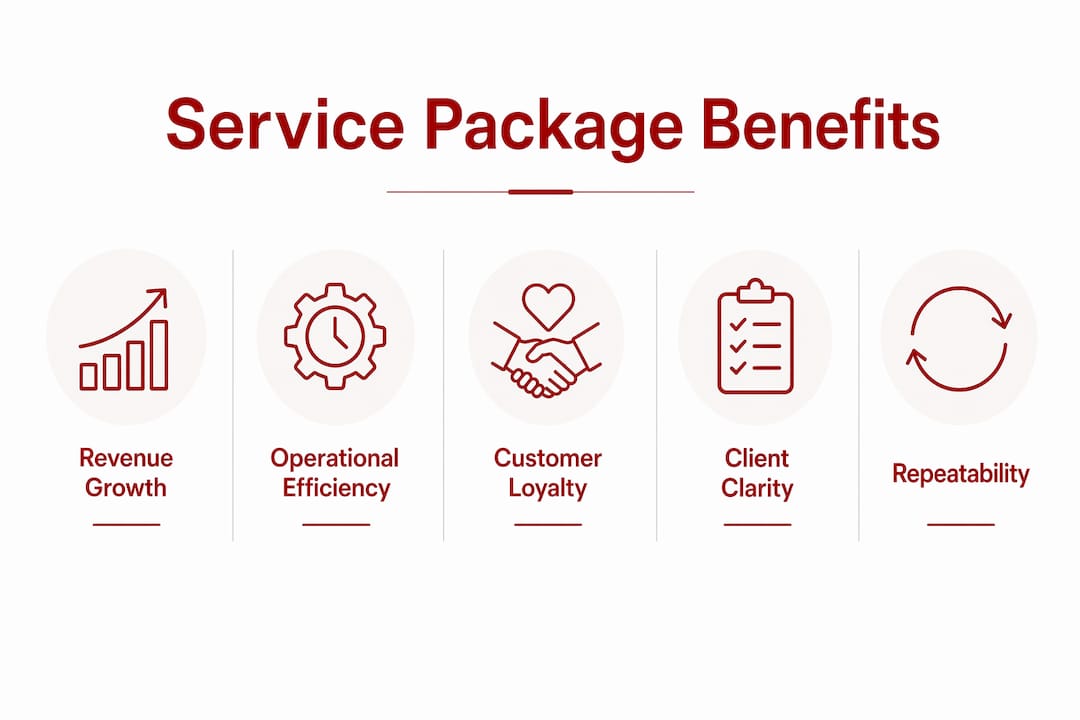
- Service packages offer fixed-scope, priced solutions that simplify client choice and replace bespoke quotes. They enhance revenue by providing tiered options aligned with client needs while standardizing operations to boost efficiency and reduce scope creep. Regular review ensures sustainability and continued alignment with market demands, fostering loyalty and scalable growth.
Service packages are defined as fixed-scope, named bundles of services with clear inclusions, a set price, and an agreed timeline, giving customers a straightforward way to understand and purchase what you offer. For small business owners and service providers, the role of service packages goes well beyond tidy pricing. They replace the back-and-forth of custom quotes, reduce decision fatigue for clients, and create the kind of operational consistency that makes a business easier to run and easier to scale. Whether you are a Canberra trades business, a consultant, or an allied health provider, structured service offerings are one of the most practical tools available for growing revenue without growing complexity.
A service package is a fixed-scope, priced offering that replaces the open-ended custom quote. Instead of asking a client to describe what they need and then building a proposal from scratch, you present named options with defined deliverables, a clear price, and a set timeline. The client chooses. You deliver. The process repeats.
This matters because most clients do not know exactly what they need. They know the outcome they want. A well-named package, such as “Website Launch” or “Monthly SEO Care,” speaks to that outcome directly. It removes the uncertainty that causes potential clients to delay or walk away.
The components of an effective package are straightforward:
Behind the scenes, you can still customise your approach. The package is the client-facing structure. Your workflow is your own. Service packaging turns your positioning and expertise into concrete offers that clients can understand and choose without needing to fully grasp the technical detail underneath.
Pro Tip: Name your packages after outcomes, not processes. “Growth Website” communicates value far more clearly than “5-Page WordPress Build.”
Tiered packages are the mechanism that lets a single business serve multiple client segments without reinventing its offer each time. The standard structure uses three levels: an entry tier, a mid tier, and a premium tier. Each plays a distinct commercial role.

Tiered packages serve distinct revenue roles: entry tiers attract new clients who are testing your service; mid tiers generate the bulk of revenue; premium tiers serve high-value clients who want more access, faster responses, and deeper engagement. This means your pricing architecture does real work, not just administrative work.
The differences between tiers should be concrete and easy to compare. Common differentiators include:
| Feature | Entry tier | Mid tier | Premium tier |
|---|---|---|---|
| Response time | 5 business days | 2 business days | Same day |
| Revisions | 1 round | 2 rounds | Unlimited |
| Account management | Email only | Email and calls | Dedicated contact |
| Review cadence | Monthly | Fortnightly | Weekly |
The underlying workflow for each tier stays the same. What changes is the level of access, speed, and support. This is what makes tiers scalable. You are not building a new service from scratch for each client. You are adjusting the delivery parameters around a consistent process.
Tiers also guide client decisions naturally. Research using the Package Matrix™ framework shows that when three well-structured options are presented, around 75% of clients choose the middle option. This means your mid tier, which is typically your most profitable, becomes the default choice when your pricing architecture is clear.
Pro Tip: If your premium tier is not selling, the problem is usually that the value difference is not visible enough. Add a concrete, named benefit that the mid tier simply does not include.
The operational case for service packages is as strong as the commercial one. When you standardise your offer, you standardise your delivery. That consistency reduces the administrative overhead that quietly drains time and profit from small service businesses.
Service catalogue management groups service options into single, managed services with quality-of-service SLA thresholds. This means every client in a given tier receives the same standard of delivery, and your team knows exactly what is expected without needing to re-read a custom brief each time. The result is fewer errors, faster onboarding, and a much cleaner client experience.
The table below shows how packaging affects key operational areas for a typical small service business:
| Operational area | Without packages | With packages |
|---|---|---|
| Quoting time | 2 to 4 hours per proposal | 15 minutes to send a package link |
| Scope disputes | Frequent, based on vague agreements | Rare, because scope is pre-defined |
| Team briefing | Custom each time | Template-driven and repeatable |
| Profitability tracking | Difficult to compare jobs | Straightforward by tier |
Scope creep is the hidden cost that packages control most effectively. When a client knows exactly what is included, there is a clear reference point for any request that falls outside the agreed scope. That conversation becomes much easier to have. Without a defined package, scope drift is almost inevitable, and it is usually the service provider who absorbs the cost.
KPMG identifies packaging efficiency as a key driver of personalised, end-to-end service experiences that span self-service and human interaction. For small businesses, this translates to a service model that feels professional and consistent to clients, even when the team behind it is small.
Clear packages reduce the friction that causes clients to hesitate or leave. When a potential client visits your website and sees three named options with defined outcomes and transparent pricing, they can make a decision. When they see a contact form and a promise to “get in touch for a quote,” many will not bother.
The importance of service packages in customer experience comes down to one thing: confidence. Clients want to know what they are getting, what it will cost, and what happens next. A well-structured package answers all three questions before the client has to ask.
Awin uses service packages to offer multiple support levels aligned with client preferences, from self-managed access through to expert-guided engagement. This approach gives clients control over how much support they receive without changing the underlying platform. The result is a service experience that feels tailored, even though the delivery is standardised.
The loyalty evidence is compelling. A Mediahuis case study found that subscribers on essential subscription bundles reduced churn by 26.5% over 12 weeks through tier migration and added services. This demonstrates that packaging is not just a sales tool. It is a retention mechanism.
“Bundling reduces churn by simplifying the buying experience, not just by discounting.” The Warner Bros. CEO attributed a significant fall in cancellations directly to compelling bundle design, not price cuts.
The lesson for small businesses is direct. When clients feel they are in the right tier for their needs, and when they can see a clear path to upgrading, they stay longer and spend more. Optional add-ons, offered after the core package is established, give clients a sense of control while increasing your average revenue per client.
Getting the structure right from the start saves a great deal of rework later. These are the practices that matter most.
Anchor pricing on outcomes, not hours. Clients do not care how long something takes. They care what they get. Price your packages around the value of the result, not the time it takes to deliver it.
Limit your tiers to three or four options. More than four tiers creates decision paralysis. Three is the proven sweet spot, with the middle option doing most of the commercial work.
Define the differences between tiers explicitly. Response time, revision rounds, communication channels, and review frequency are the clearest differentiators. Vague descriptions like “more support” do not help clients choose.
Check that each tier is economically sustainable. A package costing $450 to deliver but priced at $500 is not a viable business model. Build your cost of delivery into the design phase, not after the fact.
Review your packages every six months. Client feedback, delivery data, and market shifts all affect whether your current tiers are still the right fit. Packages that made sense 18 months ago may now be underpriced or misaligned with what clients actually want.
Use your entry tier to attract, not to sustain. The entry tier should be profitable enough to deliver without loss, but its primary job is to bring clients into your ecosystem. The mid and premium tiers are where your business grows.
Pro Tip: Before you launch a new package, deliver it once manually and track every hour and task. That data tells you whether the price is right before you commit to it publicly.
Service packages work because they standardise scope, guide client decisions, and create the repeatable delivery that makes a small business profitable and scalable.
| Point | Details |
|---|---|
| Fixed scope builds trust | Packages with clear inclusions and exclusions reduce disputes and set honest expectations. |
| Tiers serve distinct roles | Entry tiers attract clients; mid tiers generate revenue; premium tiers serve high-value relationships. |
| Operations become repeatable | Standardised delivery reduces quoting time, scope drift, and team briefing overhead. |
| Packaging reduces churn | Mediahuis data shows a 26.5% churn reduction over 12 weeks through structured bundle design. |
| Pricing must be sustainable | Each tier must cover its delivery cost with margin to spare, or it will erode profitability over time. |
Working with small businesses in Canberra, I have seen the same pattern repeat itself. A capable operator is delivering excellent work but struggling to grow, because every new client requires a fresh round of scoping, negotiating, and explaining. The business is busy but not building anything predictable.
The shift that changes things is not a pricing change. It is a structural one. When a business moves from “tell me what you need and I will quote” to “here are three clear options, which fits best,” the entire client conversation changes. Clients feel more confident. The business owner spends less time on proposals and more time on delivery.
What surprises most people is how quickly this affects recurring revenue. Once clients are in a named tier, they understand what they have and what the next level looks like. Upselling becomes a natural conversation rather than an awkward pitch. The SAP Advanced Success Plan approach, which packages expert-led engagement as a product with cross-sell and upsell built in, reflects the same logic at enterprise scale. The principle holds for a five-person Canberra consultancy just as well.
The honest challenge is maintaining consistency as you grow. Packages only deliver their operational benefit if the delivery behind them is genuinely repeatable. That requires discipline, clear internal documentation, and a willingness to say no to scope that falls outside the agreed tier. That boundary is not a limitation. It is what makes the model work.
— James
If you are working through how to present your services clearly online, your website is the first place clients encounter your packages. Asporeadigital builds fixed-price WordPress websites for Canberra small businesses, designed to present your offer clearly, load quickly, and convert visitors into enquiries. A well-structured service page, paired with a clear pricing layout, does a great deal of the sales work before a client ever contacts you. You can explore how WordPress supports digital marketing growth for Canberra businesses, or see how effective service websites present tiered offerings in a way that guides client decisions. Reach out to Asporeadigital when you are ready to build a site that works as hard as your packages do.
Service packages define fixed-scope, priced offerings that replace custom quotes, making it easier for clients to choose and for businesses to deliver consistently. They support revenue growth, reduce administrative overhead, and improve client retention.
Three tiers is the most effective structure for most small businesses. Research using the Package Matrix™ framework shows that around 75% of clients choose the middle option when three well-defined tiers are presented clearly.
Packages reduce churn by simplifying the buying experience and giving clients a clear sense of what they have and what they can upgrade to. Mediahuis recorded a 26.5% churn reduction over 12 weeks through structured subscription bundle design.
The most common mistake is failing to check that each tier is economically sustainable before launch. A package priced at $500 that costs $450 to deliver is not viable at scale, regardless of how well it sells.
Reviewing your packages every six months is a sound routine. Client feedback, delivery data, and shifts in your market all affect whether your current tiers remain well-priced and aligned with what clients actually need.

Considering GoDaddy web development service? Read this before locking your business into the wrong website setup.
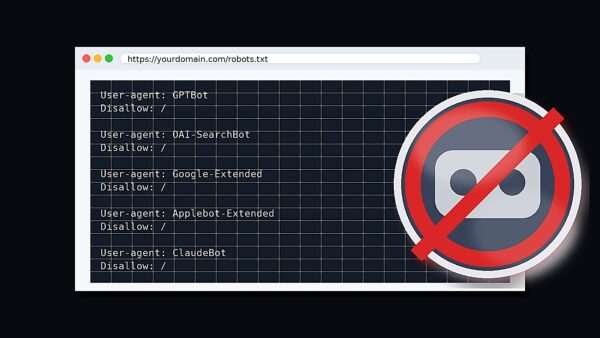
Over the last year, the biggest AI players have rolled out new crawlers for training and search. Get a plugin that helps you to opt

A simple fix today prevents the slow creep of website issues tomorrow. Stay steady, secure and in control.