
Blog

What You Get When You Pay for a Professional Website Build
Know exactly what’s included in a professional website build, what costs extra, and how to avoid surprise fees, and vague promises.

The email looks official. The subject line says your domain is about to expire. It has your business name, the right logo, and a link that says Renew now to avoid disruption. You are in the middle of a busy day, so you click. That is exactly what the scammer wants.
December is prime time for domain scams. Business owners are distracted, teams are on leave, and inboxes fill with reminders. Scammers copy real notifications and send them when you are least likely to double-check. One careless click can hand over your login, your payment details, or even your domain name itself.

Your domain name is more than a web address. It connects your website, email, customer logins and billing systems. If it falls into the wrong hands, your online presence disappears. Email stops, your website goes dark, and customers cannot reach you. Restoring control can take weeks and cost far more than a renewal fee.
This is why domain safety matters. It is not a technical issue. It is a business continuity issue.
Scam emails use urgency and imitation. They are designed to rush you into action. Here is how to spot them before they succeed.
The sender’s address is off by one character or uses a free email service.
The message demands payment through a link rather than logging in directly.
The language is pushy or alarmist, often promising immediate suspension or final notice.
Hovering over the link shows a web address that is not your provider.
Real domain and hosting companies do not send panic messages. They remind you well before renewal and they do not ask for payment through generic links.
Scammers often use real information to make their messages look legitimate. Details like your domain name, renewal date, and service provider are publicly available online unless you have asked for privacy protection.
They use automated tools to collect that information and send renewal emails that look genuine. Many target inboxes such as accounts@ or info@ because they sound official.
The message feels right because it includes real facts — but the sender is fake. That is why it is safest to ignore every renewal link that arrives by email and check your account directly instead.
If a message looks wrong, stop. Open a new browser tab and go to your real registrar or hosting provider’s website directly. Log in from there, not from the email. If your account shows no alerts, the message was a fake.
Still unsure? Call or email your provider using the contact details on their website. Scammers rely on the idea that you will not check. The moment you slow down, they lose.
Scams thrive on confusion. If your registrar has an outdated contact email, you may miss genuine renewal notices and assume the next one you see is real. Log in now and confirm your contact address, phone number and billing details are up to date. A few minutes of maintenance avoids chaos later.
Scammers rely on speed and distraction. They want you to react before you think. The simplest way to protect your business is to pause.
When a message arrives that feels urgent, take thirty seconds before you do anything. Read it slowly. Look at who sent it. Check the link. If something feels off, it probably is.
That short pause blocks most scams before they start. Awareness is not software — it is attention.
Know exactly what’s included in a professional website build, what costs extra, and how to avoid surprise fees, and vague promises.
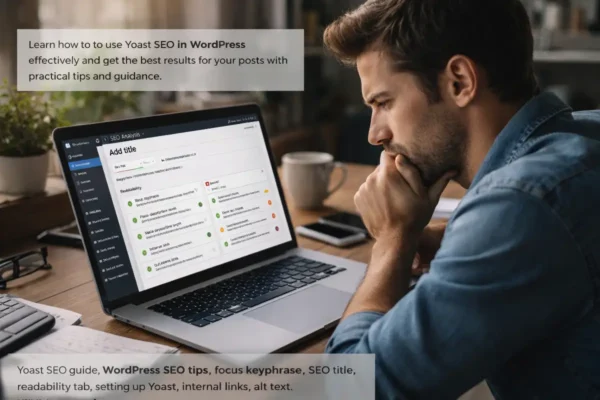
A practical Yoast SEO guide for WordPress users who want clearer posts, stronger search signals and better Google results.

Find the only Google Analytics numbers that matter, connect Site Kit, and see traffic, top pages, and whether visitors take the intended action.