
Education and Planning

Turn Your Reflections Into a Goals for 2026
Turn your reflections into clear, practical goals for 2026 with a simple framework and an easy worksheet.

TL;DR:
- Testimonials act as social proof that build visitor trust and boost conversions on websites. Strategic placement of authentic, verified testimonials near decision points increases credibility and sales, especially when using video or outcome-focused comments. Properly curated and distributed across the site, testimonials are a cost-effective way for small businesses to enhance online trust and engagement.
Testimonials in web design are defined as curated, permissioned customer endorsements that serve as social proof to build trust and encourage visitor action. Unlike uncontrolled platform reviews, testimonials give you control over the narrative. You choose which feedback to display, where to place it, and how it speaks to the specific concerns of your visitors. The role of testimonials in web design goes well beyond decoration. Platforms like Say About Us, Shoutjar, and Credibly all confirm that testimonials increase conversions by as much as 34%. That figure represents real enquiries, bookings, and sales that a site without testimonials simply leaves on the table.
Social proof is the mechanism behind every effective testimonial. When a visitor lands on your website, they carry scepticism. They have been burned before, they have seen polished marketing that did not deliver, and they are quietly asking: “Can I trust this business?” A well-placed testimonial answers that question before they even think to ask it.
The Similarity Principle is the most underused concept in testimonial strategy. According to Say About Us, audience match drives influence. A Canberra allied health provider reading a testimonial from another allied health provider will respond far more strongly than to a generic five-star rating. The closer the testimonial author matches your visitor’s profile, the more persuasive the message becomes.
Testimonials also function as risk reversal tools. Placed near a pricing table or a contact form, they quietly address the unspoken objection: “What if this does not work for me?” A specific outcome-focused testimonial at that moment reduces hesitation and keeps the visitor moving forward.
“Trust is the currency of the internet. Building it through testimonials results in steady sales growth rather than relying on transient growth hacks.” — Say About Us
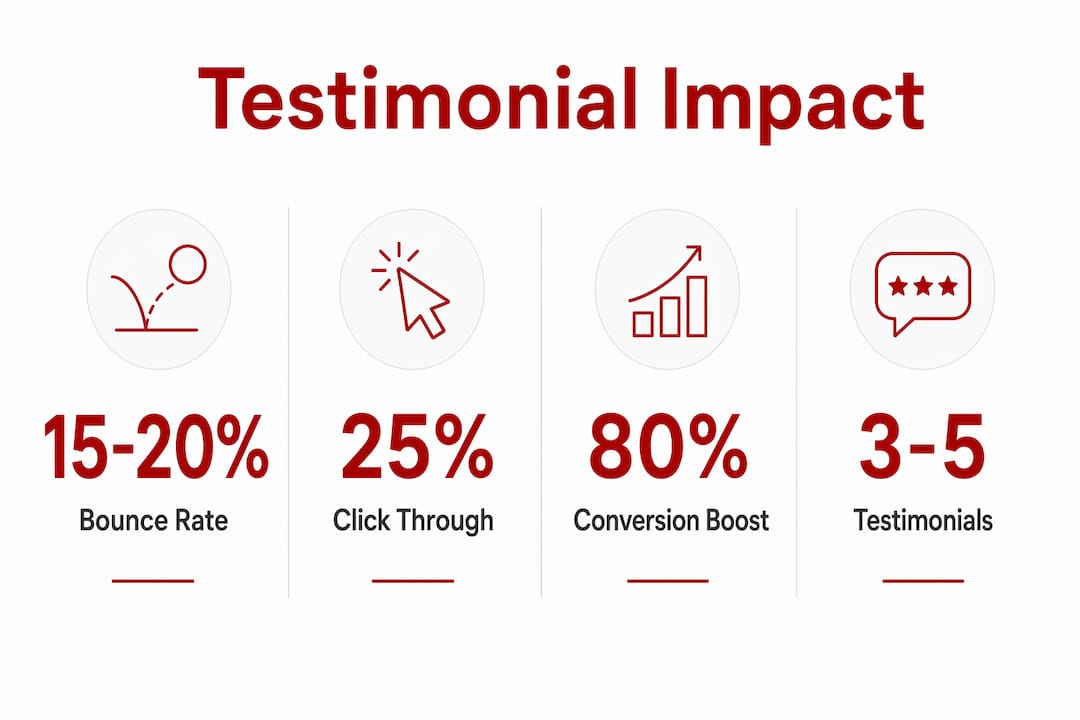
The data supports this. Social proof above the fold on homepages reduces bounce rates by 15–20%. That means more visitors stay long enough to read your offer, explore your services, and take the next step.
Not all testimonial formats deliver equal results. The format you choose, and where you place it, determines how much trust it actually builds.

Video testimonials convert 80% better than text-only testimonials. The reason is authenticity cues. Tone of voice, facial expression, and body language communicate sincerity in ways that written words cannot replicate. A 60-second video from a satisfied client carries more weight than a paragraph of praise, even if the words are identical.
Text testimonials still perform well when they are specific and well-presented. A single strong quote displayed prominently above the fold, with a name, photo, and job title, outperforms a carousel of anonymous five-star ratings. Mixed formats, combining a featured video with a grid of text quotes, give visitors multiple ways to engage and build layered credibility.
| Format | Best Placement | Conversion Benefit |
|---|---|---|
| Video testimonial | Homepage hero, service pages | Up to 80% higher conversion vs text |
| Single hero quote | Above the fold, near CTA | Reduces bounce, builds immediate trust |
| Grid or carousel | Dedicated section, mid-page | Demonstrates volume of satisfied clients |
| Micro-quote | Adjacent to forms and pricing | Reduces abandonment at decision points |
Placement is where most businesses get this wrong. Testimonials near CTAs and pricing increase click-through rates by 25% and reduce purchase abandonment by 18%. Those numbers shift when testimonials are buried on a dedicated page that most visitors never reach.
The highest-impact placements are: directly below your homepage headline, adjacent to your primary call-to-action button, beside your pricing table, and above your contact form. Each of these is a decision point. A testimonial at a decision point answers doubt at the exact moment doubt appears.
Pro Tip: Place a single, specific testimonial immediately above your contact form. Choose one that mentions a problem your ideal client recognises. That one placement alone can meaningfully lift form completions.
A testimonial that looks fake does more damage than no testimonial at all. Visitors are perceptive. They notice when something feels manufactured, and scepticism once triggered is hard to recover from.
Verification elements increase credibility significantly. Full names, professional headshots, job titles, and company names signal that a real person with a real stake in their reputation said those words. Initials and stock photos do the opposite. They raise red flags.
The quality of the testimonial content matters just as much as the presentation. Specific, outcome-focused testimonials outperform vague praise every time. Compare these two examples:
Specific testimonials trigger stronger trust responses because they describe a recognisable problem and a measurable result. Vague praise could have been written by anyone. Specific outcomes feel earned.
Audience relevance matters more than volume. Displaying 20 testimonials from industries your visitor does not recognise is less persuasive than showing 3 from businesses just like theirs. Three to five testimonials per key page hit the right balance. Fewer looks unconvincing. More can overwhelm.
Pro Tip: Structure your best testimonials around a problem-solution-result narrative. Ask clients to describe the challenge they faced, what changed after working with you, and the specific outcome they achieved. This format is far more persuasive than open-ended praise.
Common pitfalls to avoid:
Strategic integration means treating testimonials as functional design elements, not decorative additions. Distributing testimonials across conversion points rather than concentrating them on a single page is the single biggest improvement most business websites can make.
Here is a practical approach to get this right:
For a broader look at how these principles apply across your site, the guide on optimising website conversions covers the full picture of turning visitors into leads. You can also explore features of effective service websites to see how testimonials fit within a complete trust-building framework.
The curated nature of testimonials, as distinct from uncontrolled reviews, gives you a genuine advantage. Curating testimonials lets you address objections directly, something a review platform will never allow you to do. Use that control deliberately.
Testimonials placed strategically at conversion points, presented with full verification details, and matched to your visitor’s profile are the most cost-effective trust signal available to small business websites.
| Point | Details |
|---|---|
| Placement drives results | Testimonials near CTAs and pricing increase click-throughs by 25% and cut abandonment by 18%. |
| Video outperforms text | Video testimonials convert up to 80% better due to authenticity cues like tone and body language. |
| Verification builds credibility | Full names, headshots, and job titles are non-negotiable for testimonials to be believed. |
| Specificity beats volume | Three to five outcome-focused testimonials outperform pages of vague praise. |
| Distribute, do not centralise | Spreading testimonials across decision points is far more effective than a single dedicated page. |
The businesses that get the most from testimonials are not the ones with the most reviews. They are the ones who treat testimonials as a deliberate part of their design, not an afterthought.
What I see most often is a “testimonials page” sitting quietly in the navigation, rarely visited, doing almost nothing. Meanwhile, the homepage, the services page, and the contact form, the pages where decisions actually happen, have no social proof at all. That is a missed opportunity every single day.
Video testimonials are becoming more accessible for small businesses. A short, genuine clip recorded on a phone, with a client speaking naturally about their experience, consistently outperforms polished text quotes. Authenticity matters more than production quality. Visitors respond to real people, not marketing copy.
The trend I find most encouraging is the rise of micro-testimonials. A single sentence from a named client, placed beside a form or a button, is one of the quietest and most effective conversion tools available. It does not shout. It simply reassures. Small, steady habits in testimonial curation create a strong foundation for long-term trust.
For small businesses in Canberra, this matters even more. Local credibility is everything. A testimonial from a recognisable local business or a familiar suburb carries weight that a national brand’s endorsement simply cannot replicate.
— James
If you want your website to do more than look professional, testimonial strategy is one of the most practical places to start.
Asporeadigital builds WordPress websites for Canberra small businesses with testimonial placement, format, and credibility built into the design from the beginning. That means the right quotes in the right places, presented in a way that builds trust and encourages enquiries. Whether you are starting from scratch or improving an existing site, the WordPress digital marketing guide is a useful starting point. For homepage-specific guidance, the homepage design guide covers how social proof fits within a complete design strategy. Get in touch with Asporeadigital to talk through what your site needs.
Testimonials serve as social proof that builds visitor trust and reduces hesitation at key decision points. Placed strategically near CTAs, pricing, and forms, they can increase conversions by up to 34%.
The most effective placements are above the fold on the homepage, beside pricing tables, adjacent to CTA buttons, and above contact forms. These are the moments where visitor doubt is highest and reassurance has the most impact.
Three to five testimonials per key page is the recommended range. Fewer can appear unconvincing, while too many risk overwhelming visitors and diluting the impact of your strongest endorsements.
Video testimonials convert up to 80% better than text-only testimonials. Tone of voice and body language communicate authenticity in ways that written words cannot, making video a strong choice for service-based businesses.
Full names, professional headshots, job titles, and specific outcome-focused language all increase credibility. Vague praise without verification details raises scepticism rather than building trust.

Turn your reflections into clear, practical goals for 2026 with a simple framework and an easy worksheet.
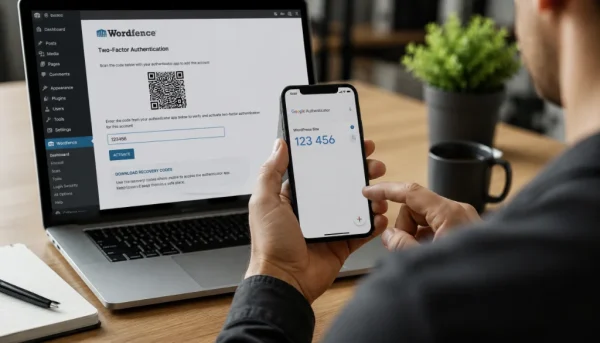
Protect your WordPress login with Wordfence 2FA, Google Authenticator and backup codes to reduce the risk of unwanted access.

Why authors need a website to build credibility, showcase books, grow readers and create a professional online presence.