
Blog

Make Your Product and Service Pages Work Harder
Your product page should work like a quiet salesperson that builds trust and converts visitors into buyers. Learn how to write a page that sells

Spam isn’t a technical problem. It’s an attention problem.
If you run a small business, you already do enough context switching in a day. You’re replying to customers, juggling jobs, keeping money moving, and trying to stay on top of the never ending admin. The last thing you need is your inbox filling up with messages that aren’t even real.
The annoying part isn’t just the spam itself. It’s what it does to your head.
Every junk enquiry sucks mental effort. Is this real? Is it worth opening? Do I need to respond? Is it safe to click? Is there a real customer hidden in here somewhere?
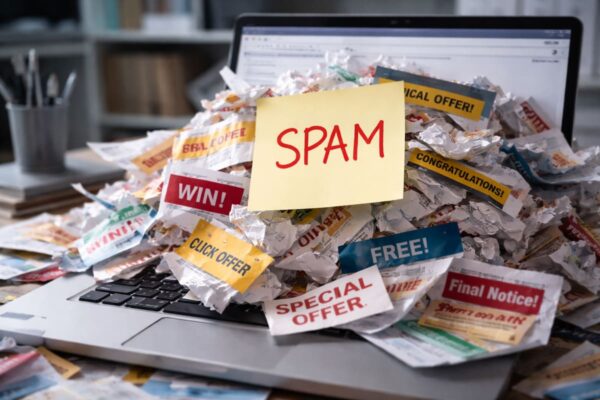
As your business gets more visible online, the junk increases with it. Your website gets scraped. Your forms get probed. Your address gets passed around more. The same inbox that felt manageable when you were smaller becomes a slow leak of time and patience once things pick up.
When your inbox is noisy, you start treating every message with less care. You scan faster. You assume less. You get impatient. You miss things.
Spam waste time but critically it reduces your attention.
It helps to name it, because spam isn’t one neat category anymore.
Some of it is obvious bot rubbish. The form message that’s pure nonsense, a block of random words, or a suspicious link you didn’t ask for. No human sat down and typed it. It’s automated. It’s sprayed across thousands of sites a day, looking for any crack in your website defences that it can exploit.
Then there’s the spam that pretends to be a real enquiry. “Hi, I love your website and I can improve your ranking.” “We can get you more leads.” “We noticed errors on your site.” Often these are sent by tools as well. A human might be involved somewhere down the chain, but not at the point it hits your inbox.
Treating it like a real conversation is exactly how you end up wasting time.
You’ll also see bait messages. A “quick question” with a link. A fake invoice. A fake delivery notice. Anything designed to make you click when you’re busy.
And then there’s the one business owners hate most because it looks almost normal: a vague, low effort message. Two words. No context. No details. It still takes attention to decide if it’s a customer or junk.
Spam is built to make you do work. Even if you delete it, it interrupted your day.
A lot of spam problems start with a well meant decision: putting your email address on a website.
It feels direct. It feels helpful.
The problem is, it also gets scraped.
Bots crawl websites collecting email addresses constantly. Once yours is collected, it gets passed on in lists that are sold. That’s why your spam increases over time. You can hide the address in an image, write “at” instead of “@”, or tuck it into a footer, but it still gets found.
A contact form gives you more control. Before you take a message, you can filter it and block anything you don’t want. You can add small checks that humans barely notice, but bots hate.
You can route messages properly, and you can change the form rules later without changing how customers reach you.
There are times, however, that you do need an email address on the site. Fair enough.
If you do, don’t publish a personal inbox. Don’t publish an operational inbox tied to billing or support. Use a public facing address like hello@ or enquiries@ and treat it like a buffer.
It’s better to manage these separately rather than forwarding them to another inbox.
That way, if it gets scraped and flooded, your day to day operations don’t get dragged down with it. You can change the public address later without breaking everything else.
Spam isn’t polite, and it doesn’t follow the rules that businesses follow.
Clicking “unsubscribe” on the wrong message doesn’t always remove you. Sometimes it confirms your address is real. Sometimes it puts you on more lists. Sometimes it invites more junk, not less.
Unsubscribe only from senders you recognise and trust. For everything else, mark it as spam and let your mail system learn.
The goal is to cut the noise down so real customer messages don’t get buried, and you don’t start resenting your own inbox.
When spam is controlled properly, the experience improves quickly. Real enquiries stand out. You respond faster because you’re not sifting. Your staff stop bracing themselves before opening messages. Your contact channel starts working like it should.
That’s the difference. Not fewer emails.
Better attention for the ones that matter.
Your product page should work like a quiet salesperson that builds trust and converts visitors into buyers. Learn how to write a page that sells

Packages or custom? See each stage from discovery to launch, what you provide, and how we keep Canberra region builds on track.
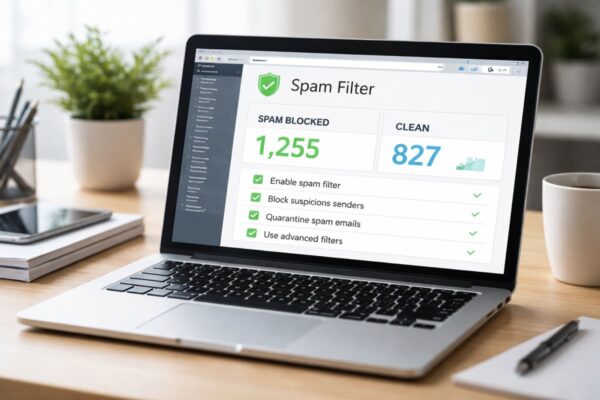
Reduce contact form spam without annoying real customers. Add simple form protections, improve email delivery, and use hosting filters to quarantine junk.