Blog

Maintaining Website resilience when EOFY distracts
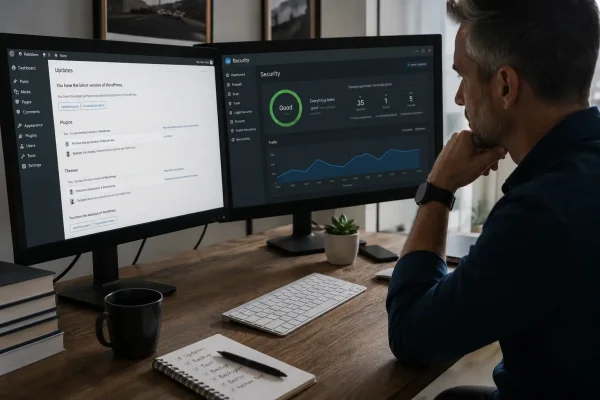
EOFY pressure? Build website resilience with WordPress updates, 2FA, offsite backups and a restore test so your site keeps selling.

Most website owners only look at Google when they’re worried. That’s understandable. Search feels like this big external judgement, when really it’s just a mirror. It reflects what your website is currently saying, and how clearly it’s saying it.
This quick check is about seeing your site the way a stranger sees it, without needing any tools, logins, or technical knowledge.
Open Google.
Type: your service + your suburb or city.
So if you’re a dog groomer in Kingston, you’d type dog groomer Kingston. If you’re doing WordPress maintenance in Canberra, you’d type WordPress maintenance Canberra. Use the words you think a customer would use, not the words you’d put on a brochure.
Now look for your result, or notice that you can’t find it.
When you see your listing, read it like you’ve never heard of you. Don’t skim it with your “I know what I meant” brain. Read it like you’re trying to decide whether to click.
If you feel any hesitation reading it, a customer will too.

You’re really checking three things.
First, does the title tell you what the page is about, or is it vague. If the title says “Home”, “Welcome”, or something generic, it’s a missed opportunity.
Second, does the little description underneath sound like a real business, or does it read like random scraps. If it feels chopped up or meaningless, it often means Google is grabbing whatever it can from the page because it hasn’t been given a clean summary.
Third, does the link look like the page you’d want someone to land on. A clean link reassures people. A weird one makes them pause, even if they can’t explain why.
That’s the one minute check. It tells you what’s happening today.
This is where it starts getting useful, because you stop guessing what customers search for and you start working with real phrases.
Take a piece of paper and write down five search phrases a customer might type to find you. Keep them plain. Keep them specific. If you’re local, include the location.
If you’re stuck, finish this sentence:
“What would someone type if they needed this and didn’t know any business names?”
Now search each of your five phrases and jot down a quick note beside each one:
Do you show up.
If you do, does your listing make sense.
And if someone clicked, would they land on the page you’d want them to land on.
You’re not trying to “win Google” here. You’re learning how your business currently appears in the real world.
Once you’ve run those searches, pick the one phrase that would bring you the best customers and ask a simple question:
“Which page on my site should show up for this phrase?”
If you can’t answer that, you’ve found the thing to fix. You likely need a page that matches the phrase.
If you can answer it, you’ve found the thing to sharpen. That’s where titles, slugs, headings and excerpts start doing real work, because you’re aligning one page to one search phrase, instead of hoping your whole site will somehow cover everything.
Do the one minute check now. If you have the extra five minutes, do the longer version and circle the one phrase you care about most. That single circle is usually where the best SEO improvements start.
EOFY pressure? Build website resilience with WordPress updates, 2FA, offsite backups and a restore test so your site keeps selling.
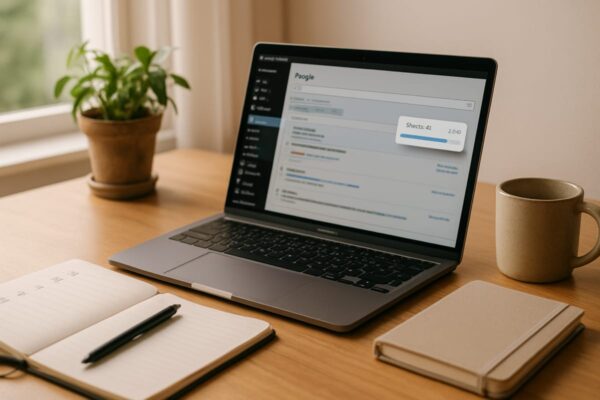
Your website might look fine, but its technology could be holding it back. Learn why keeping WordPress, PHP and plugins current keeps your business faster,
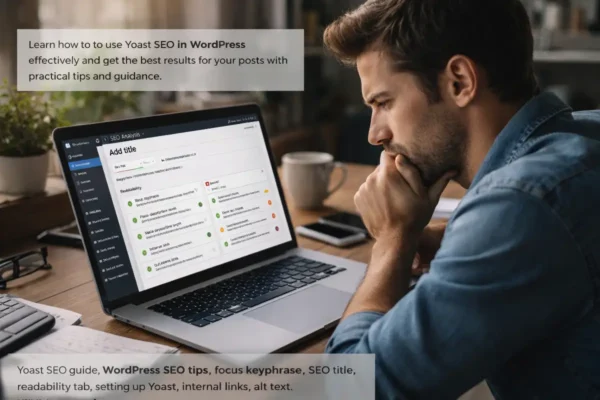
A practical Yoast SEO guide for WordPress users who want clearer posts, stronger search signals and better Google results.